|
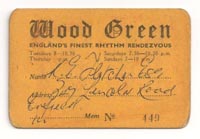
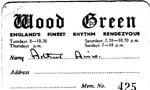
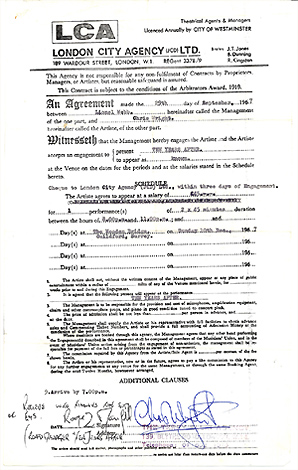
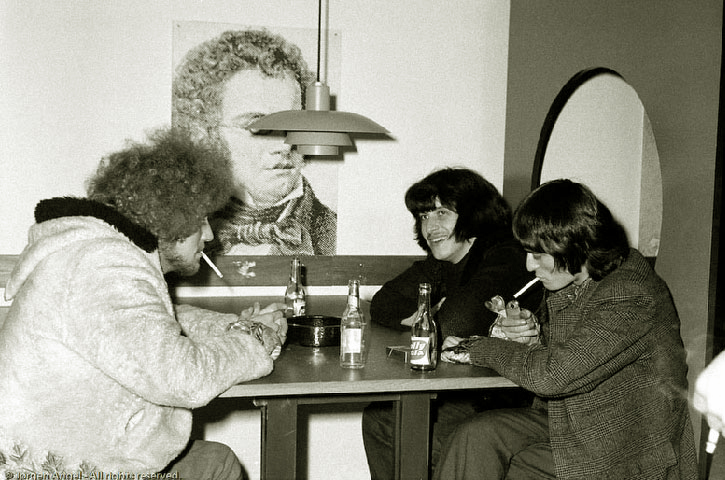
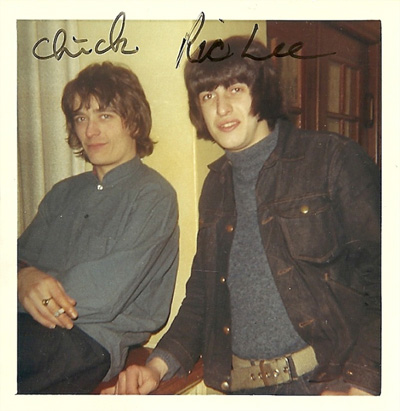
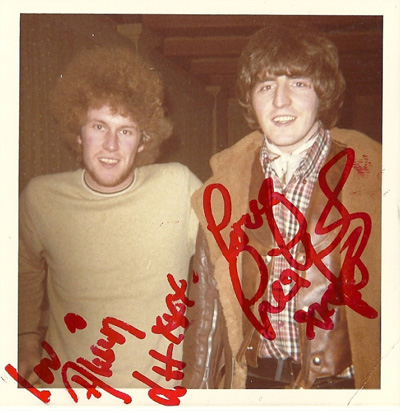
TEN YEARS AFTER at Lionel Webb's "WOODEN BRIDGE HOTEL"
December
10th, 1967 / March 10th, 1968
Many Thanks to Lionel Webb for
these rare memorabilia
click
pictures to enlarge
|
|

|
|
The town of
Guildford, England dates back to AD-885 in a
reference from then King Alfred The Great. Jump
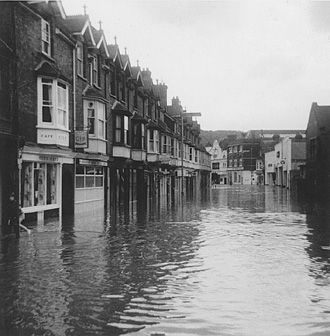
forward to 1968 and the worst recorded flood was
recorded on Saturday September 14, 1968, when a
heavy persistent rain fell upon the Guildford area
of Surrey.
By the
evening of September 15th - the news was
spreading that the river Wey had burst its banks,
washing away the bridge on the Horsham Road between
Shalford and Bramley.
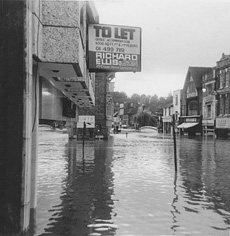
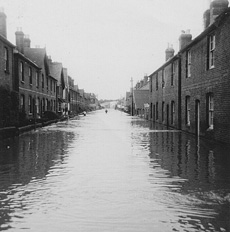
The lower
lying parts of Guildford Town were severely flooded,
rising over six feet in some places. This was a
flood that is only expected to occur once every
thousand years.
This was
September and Ten Years After played at the Wooden
Bridge Hotel on March 10, 1968 as well as a year before on December 10,
1967.
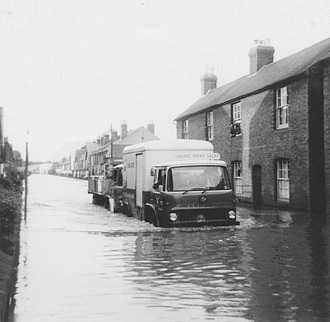
Now, the story that I heard from the band, was that
Guildford was still so flooded, that they could only
reach the venue by the use of a moving truck type
vehicle, with high wheels. I believe this was for
the 1968 concert date.
Apparently,
this historic flood was so bad that the effects of
it were still causing problems months later. A very
memorable experience for the band, trying to get to
their gig on time.
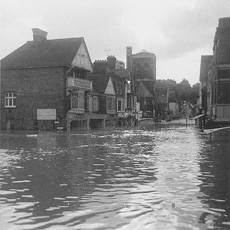
|
|
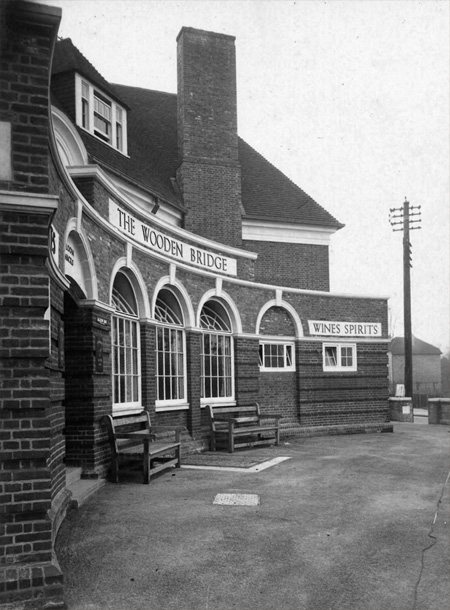
The Wooden Bridge Public House
Guildford - Pub / Bar / Hotel
The following
excerpt is from Mod's Generation Magazine and it's
writer David Birchall who holds the copyright. Our
thanks to him for allowing us to use excerpts of his
article on this page.
The link to David
Birchall's full article in Mod Generation is here:
http://www.themodgeneration.co.uk/2011/01/south-london-mods.html
Dave Else was the DJ at
the Wooden Bridge and also wrote an article-in three
parts that can be found here:
http://themodgeneration.com/profiles/blog/a-suburban-mod-s-forgotten-story-part-1
The Early
1960’s – The Mod’s Generation – Known As The Society
of Cool
The South
London Mod’s – The Mod Scene in Guildford, England
started in the summer of 1964. They travelled on
very smart Italian Lambretta scooters, with modest
accessories such as added lights stolen from Honda
50’s. They wore parkas that were basically worthless
in wind, rain and cold, with trilby hats – and soft
animal hide shoes.
Violence was
a major part of the Mod’s Scene, and there was no
getting away from it.
One night at
the Wooden Bridge Pub, there was a confrontation
between us and the Guildford mod’s. At that time I
was mouthy, but I was no fighter. I listened to
their plans to come into town the following Tuesday
and kick ass. I returned to my group and told them
exactly what I had heard. On the following Tuesday,
we were more than ready to rumble with them. We had
increased our numbers so much, that when they rolled
into town they took one look and kept on going. We
made up the Guildford Boys after that. We saw very
few “Rockers” as they stopped going to the resort
towns after 1964 because they were vastly out
numbered.
We would go
to dances at the “Wooden Bridge Pub” in Guildford
when The Rolling Stones played there. The dances at
the main dance ballroom in Guildford that they named
“The Ricky Tick Club” but it was Mickey Mouse (with
a smile). The “Crawdaddy Club” – Eel Pie Island on
occasion and the “Harvest Moon Club” also in
Guildford.
We would get
to see: Georgie Fame, Chris Farlowe, Long John
Baldry, Spencer Davis and of course John Mayall. We
also hung out at “The Disc” on Wardour Street.
At The
Wooden Bridge Hotel – Brian Jones fathered a child.
In November of 1959 he went there to see a band, he
met a married woman named Angeline. The two had a
one night affair that resulted in a pregnancy.
Angeline and her husband decided to raise the baby
named Belinda together. As for Brian, he always
wanted to be a Pop Star, the minute he saw The
Beatles. The Rolling Stones Played at the Wooden
Bridge Hotel on March 30, 1963,
April 19, 1963 - June 7, 1963 and - August 7, 1963
|
|
 |
|
click picture for the
PDF file |
click picture for the PDF file
|
|
Ten Years After
Concert List For 1968:
January 5,
1968 – The Marquee Club – London, England
January 12,
1968 – The Manor House – London, England
January 13,
1968 – The School Of Economics – London, England
January 19,
1968 – The Marquee Club – London, England
January 23,
1968 – Klooks Kleek – London England
January 30,
1968 – Fishmongers Arms / Wood Green, London
February
1968 – Kultuuritalo – Helsinki, Finland
February 2,
1968 – Lorensberg Circus – Gothenborg, Sweden
February 6,
1968 – The Marquee Club – London
February 9,
1968 – “Bluesville 68” – Hormsey Wood Tavern – Manor
House – London
February 10,
1968 - The Gladsaxe Teen Club – Denmark
February
1968 – Pop Club – Brondby, Denmark
|

|
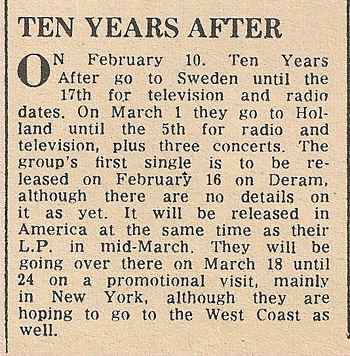
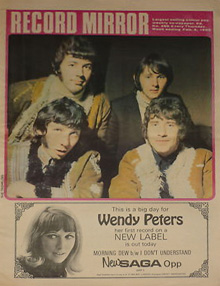
Record Mirror January 20, 1968
|
 |
|
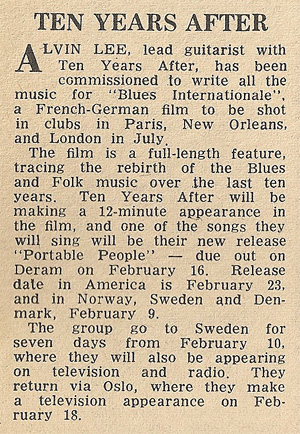
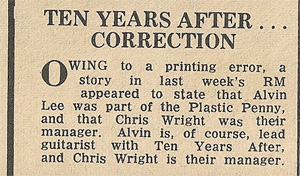
Record Mirror
February 3, 1968
|
|
|
|

1968 February 10, Ten Years
After at Teen Club, Gladsaxe, Denmark - Photo: Jorgen
Angel
The following photos
were taken by JØRGEN ANGEL
at the "Teen Club", Denmark
10th February, 1968
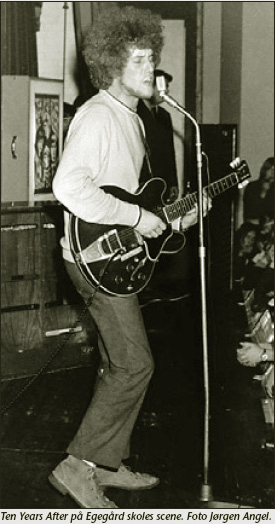
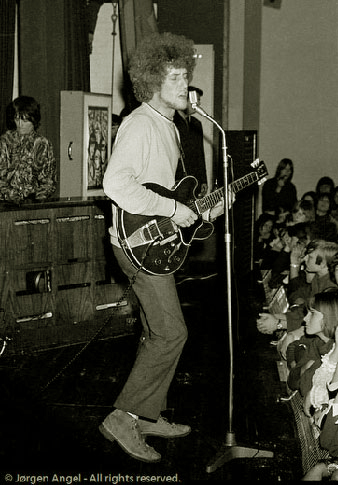
both photos are the same, but the one
on the right gives more valuable
detail
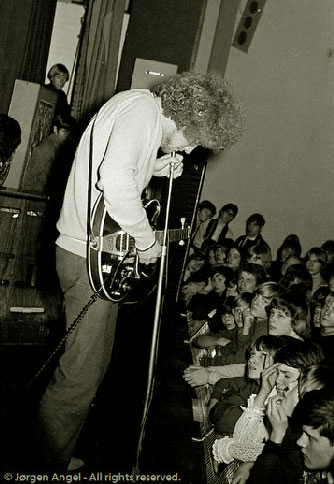
The youth of Denmark - spellbound or just wondering what to make
of it all
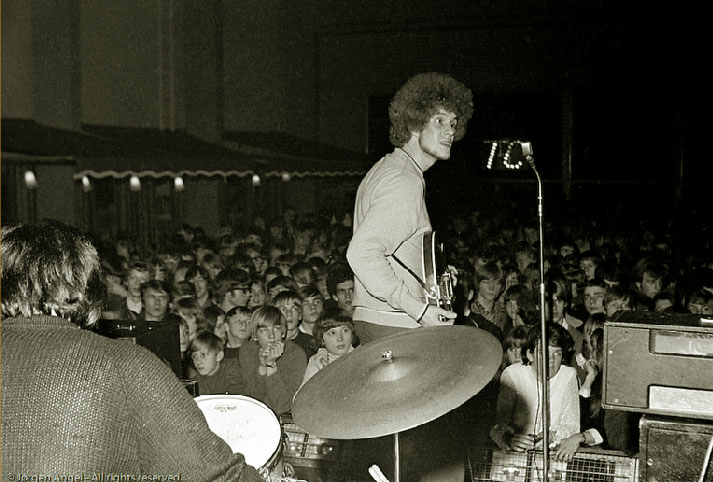
Photo
Showing the audience in between songs. Alvin's asking Leo Lyons
(on bass) What's the next song on their Set List !
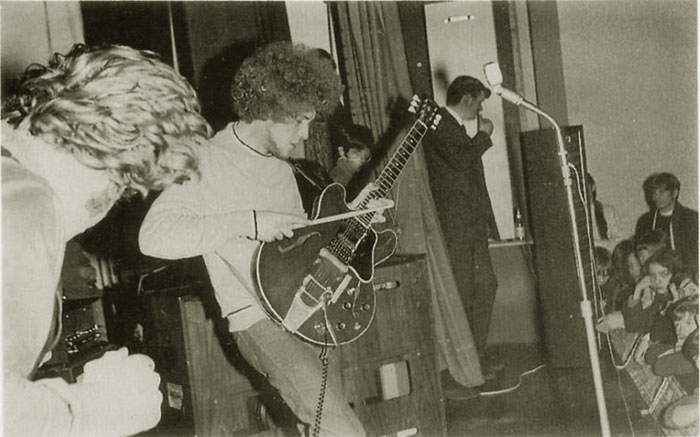
Leo Lyons and Alvin Lee with a nice shot of the front row audience
- does she look bored?
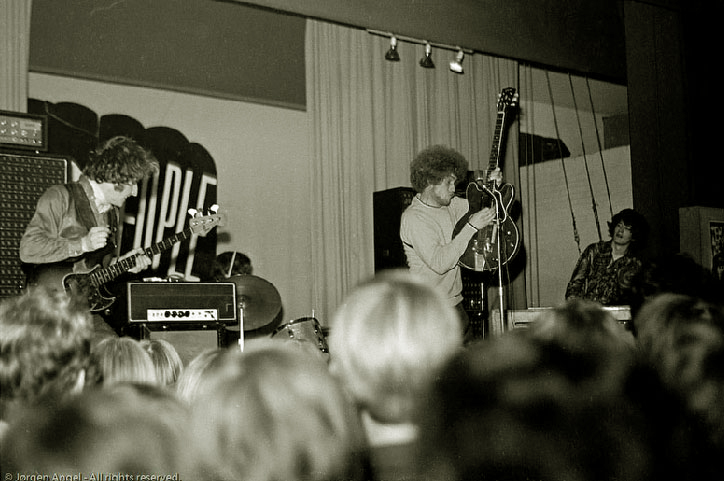
Leo Lyons (left side) Ric Lee (with drum stick on the kit)
Alvin Lee (third from left) and Chick Churchill on keyboards
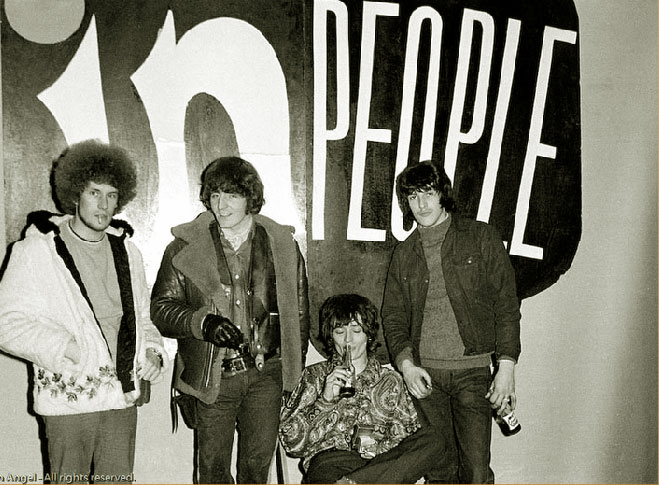
"In People" Ten Years After were following no trend -
in fact,
they were the brand new trend setters
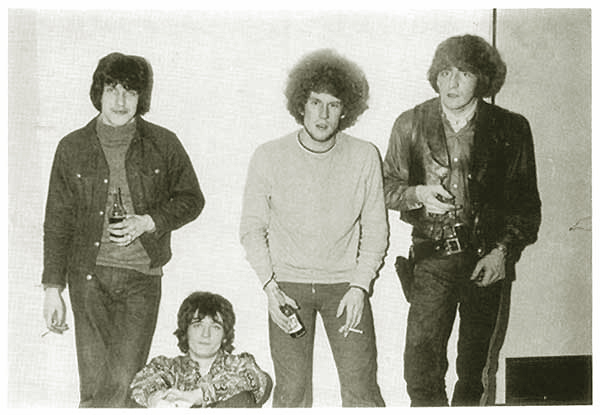
Alvin Lee (left) Ric Lee (middle) and Chick Churchill (far
right) backstage area
|
February 1968 - Ten Years After in
Denmark
Cold winter. The
southern danish Lowlands. Small town Holeby’s
teenagers suddenly get a wake up call. Our music
club, Flower Pop was contacted by producers from DR
TV. Due to some cancelled gigs in Sweden british
blues-rock group Ten Years After was rushed through
a short Danish tour during the 10th-16th of February
1968.
With no time for
further promotion only a few local newspapers and a
teenage magazine were contacted. DR producer Palle
Holgersen wanted an audience, and the coconut
telegraph and jungle drums gathered club members.
Tests and rehearsals started early the 15th and the
16th we were more or less ready. Many popclub
members were left outside in the cold though. Only
some 200 were let inside. At their arrival they saw
why: Their favorite stomping ground, the old cinema
theater, was occupied by equipment. Lightning-,
sound- ,TV-boxes and cables and orchestra gear all
over. 25 DR-people, managers, press- a.s.o.
Close to the nearby
Holeby Inn outside was the DR transportation and
recording busses. By 1968 DR was still trying to get
used to the loud rock concerts. The b/w tv recording
was aired the 24th of february on national tv. The
tapes might be lost, but luckily some photos
surfaced and caught the event.
A
good music program indeed. Copenhagen folksinger Ann
Tholsted had her first public appearance and Money
Makers, an established Danish pop group found time
to pool and snowball in between rehearsals. They
remember: " We were very impressed by Ten Years
After. After arriving they slept around just before
going on stage, delivering a fantastic show and
returning to the tour bus".
Leo
Lyons, Ten Years After: "I remember playing Holeby.
It looks from the offstage shots that the band had
been on the road for some time. I noticed the photo
of me asleep. Those early tours of Skandinavia,
particularly Denmark were always something we looked
forward to. Sometimes we played two venues on the
same day but we always got a great reception from
the audiences and that made the many hours of
travelling in the band van worthwhile."
They
played the 18th in local Reventlowparken before
taking off to stardom.
see pictures at https://lf-rock.dk/tv-i-flower-pop
|
|
Special Section of
Interest / Gladsaxe Teen Club, Denmark:
Ten Years After to
me always seemed to be the under-dog band, they were
separated from many of the most popular rock acts, as Ten
Years After were better known for playing excellent jazz and
then progressed into the experimental progressive category,
which buried them even further. Their performance at
Woodstock 1969 set the record straight, and proved them to
be a stellar rock `n´ rock and roll band of the highest
calibre. They established themselves as a rock and roll
pedigree. Thus sealing their position.
 In my research, I
was really stunned to learn that Ten Years After was on
equal footing with the likes of Led Zeppelin, Deep Purple,
The Nice, John Mayall, Black Sabbath, Cream
and all the other superstars of the day. In my research, I
was really stunned to learn that Ten Years After was on
equal footing with the likes of Led Zeppelin, Deep Purple,
The Nice, John Mayall, Black Sabbath, Cream
and all the other superstars of the day.
1968 and the “Teen
Club” became an epiphany for me, to learn that Ten Years
After were even greater than I could ever have imagined them
to be, and believe me when I tell you, I always had the
highest respect for the musicians and the Ten Years
After name.
Please,
take a little time here and learn how, where and why
it was, that Ten Years After got another valuable leg up on
the fame and fortune that was heading their way.
Why this is called a
special section, is because we are also including a general
overview of Led Zeppelin’s gig at the “Teen Club” in
1968-1969 and this section also features the band “Earth” as well. Earth soon changed their name to
"Black Sabbath" and their
connection to Ten Years After is invaluable knowledge in the
school of rock and roll.
Once you have soaked
in the time frame, the feel of the venue and the times that
were definitely changing, you’ll be better prepared to move
forward with a brand new and better understanding.
From Dave.
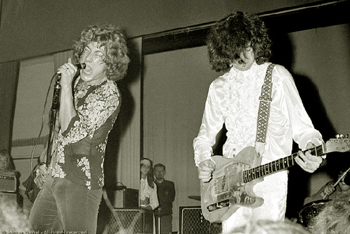  Robert Plant - Jimmy Page and John "Bonzo" Bonham - Jimmy Page
sitting and playing Robert Plant - Jimmy Page and John "Bonzo" Bonham - Jimmy Page
sitting and playing
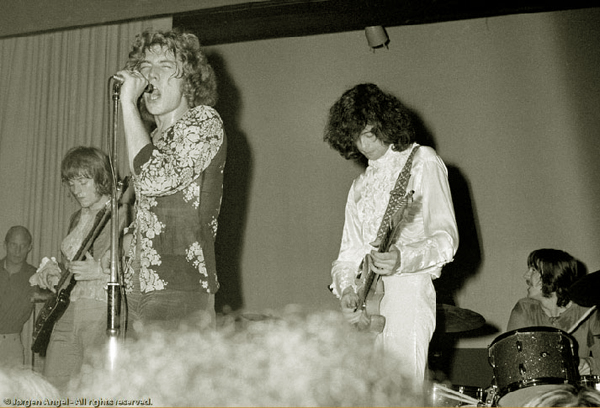
Robert Plant (center) Jimmy Page (to his left) John Paul Jones
(to his right) and far right on drums is John Bonham
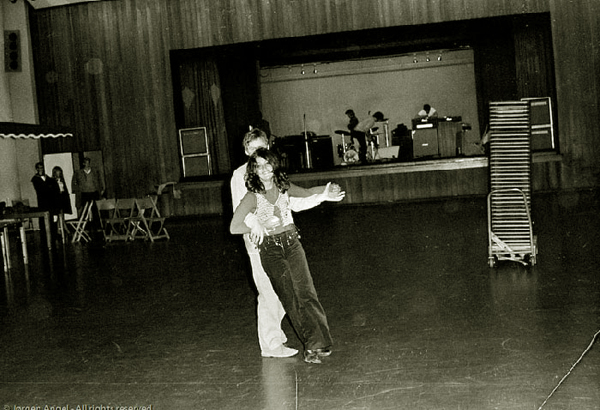
The last dance - maybe the last time - in a short amount of
time dancing would be replaced by sitting on the floor
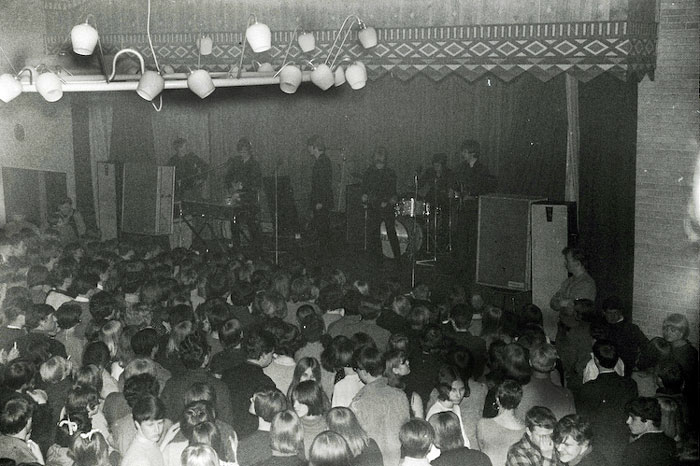
A great overview of the "Gladsaxe Teen Club" venue - with so many young faces |
|
Photos Courtesy of
Pieter Kentrop
Photos taken 17 February 1968 - the same time period as their
concert at the "Teen Club"
|

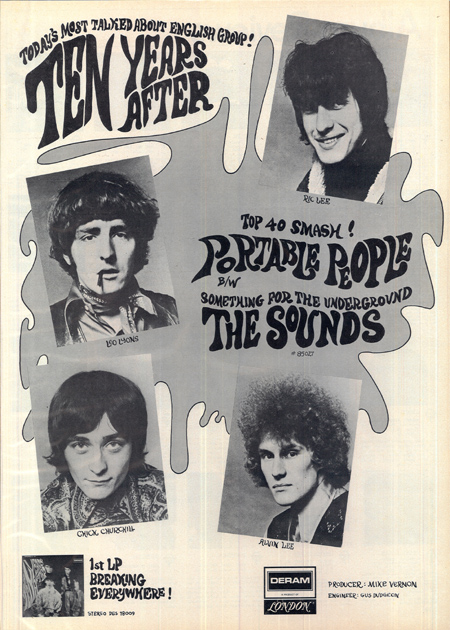
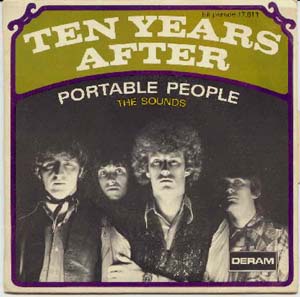
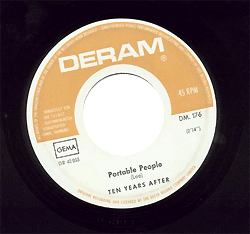
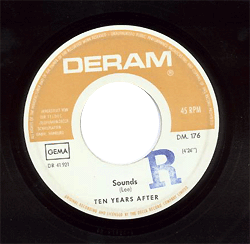
February 1968 - Single
"Portable People / The Sounds", France
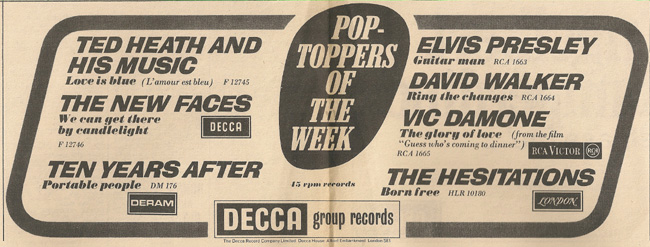
Record Mirror February 17, 1968
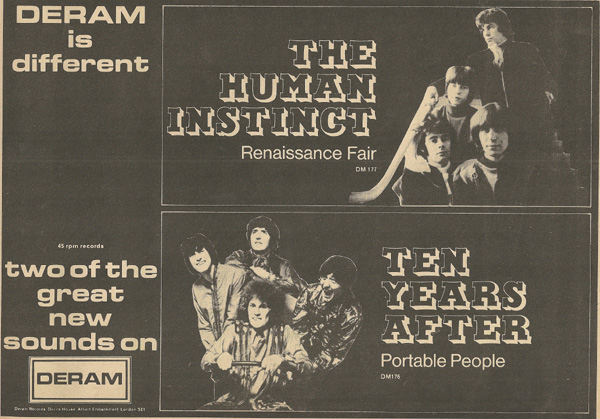
Record Mirror February 24, 1968

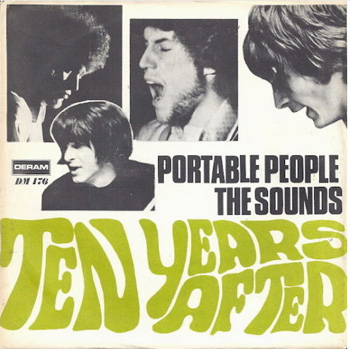
February 1968 -
Single "portable people / the sounds", The Netherlands

|
Ten
Years After March 2, 1968
Self
Titled Album
While
not especially different
from other electric blues groups, Ten Years
After do rank with the more talented ones. Their
sound is exciting; their music has texture. Ten
Years After has the potential of a hot new group
on the horizon.
Bill
Board Magazine

|
Ten
Years After – Record Mirror – March 2, 1968
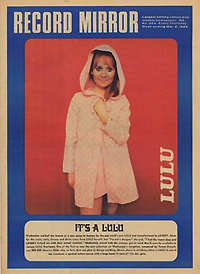
Ten
Years After have a single out at the moment – their
first – that could well be a hit. It’s called
“Portable People”.
“We’ve
all got a lot of confidence in it,” said Ric, the
group’s drummer. It’s not really our style of music
– though it’s still “us”. If you see what I mean.
It’s a very commercial sound, but even if it’s a hit,
I don’t think we’ll ever record such a commercial
number again – not that it’s bad or anything. It’s
just that we prefer to record what we like, and not
what’s necessarily hit material. What pleases us the
most is that we’ve been accepted as a group for
playing the sort of music that we like – which is
basically blues. So we haven’t had to make too many
concessions. “And if “Portable People” does get
into the charts, we’d never change our stage act or
anything, and become more “pop”. We’ve got a lot
going for us as we are – it’s very bewildering,
really, because suddenly it all seems to be happening
for us. And it
wasn’t so long ago that we were having a very rough
time – in fact we haven’t quite caught up with
ourselves as yet”.
Which
isn’t surprising, because apart from playing their
particular brand of blues, in a million and one
different countries, they’re also involved in a film
and lecture tour!
By
Derek Boltwood
|

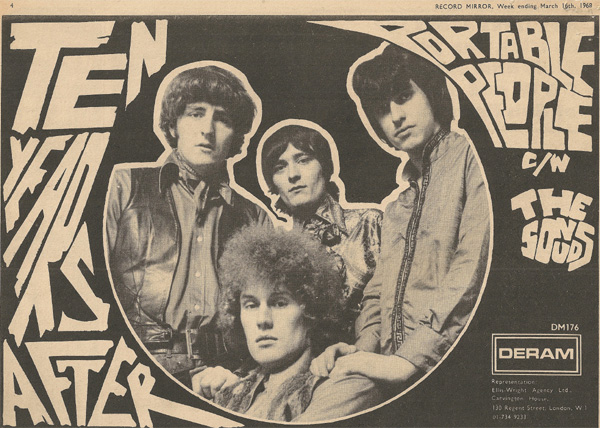
Record Mirror March 16, 1968
Tour Dates Continued:
March
10, 1968 – The Wooden
Bridge Hotel, Guildford
March 15, 1968 – “Bluesville 68” Homsey Wood Tavern
- Manor House
March 18, 1968 – The Cromwellian, London
March 20, 1968 - The Grafton Rooms, Liverpool
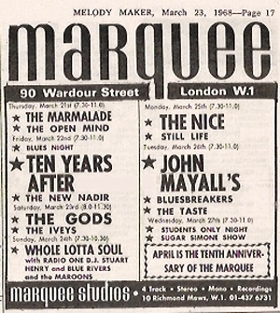
March 22, 1968 – The Marquee Club, London
March 23, 1968 – The Corn Exchange, Chelmsford
March 28, 1968 - The Zodiac Club, Beckenham
|
|
|
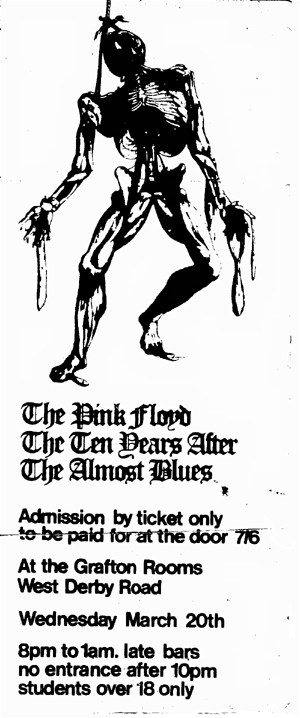
On
Wednesday March 20, 1968 – Pink Floyd – Ten Years After
and The Almost Blues played at the Grafton Rooms.
Located on West Derby Road in Liverpool, England.
On
Thursday January 10, 1963 the Beatles played here. At different
times, Joe Loss – Victor Silvestre – Henry Hall and Duke
Ellington also performed at this venue.
History:
The Grafton Ballroom was an entertainment centre in Liverpool,
England that opened on February 2, 1924. It was a purpose-built
hall that was able to accommodate a band and 1,200 dancers. It
was built next to the Locarno Ballroom which is known as the
Liverpool Olympia. It has for several years been under the same
ownership as the Olympia.
Update: In late 2008 the Grafton closed as a dance venue, It’s
to be refurbished and reopened once again, this time as a
Comedy Club.
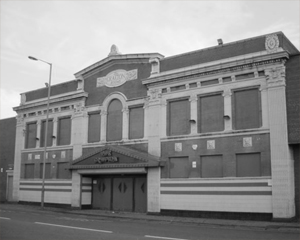
The Grafton is as well known in
Liverpool, as the Moulin Rouge is in Paris. It started life
as a dance hall, then later a night club, it’s more of an
institution. Friday evening was “Grab A Granny Night,”
which involved having an older woman as your date and
swinging or rocking to the music all night long. An Ode to
the Grafton Rooms: Grab a granny, grab a gran, do the
business if you can. Down a cold alcoholic drink, down a
few, anything in a skirt will do.
Hit
the dance floor, hit it fast, don’t know how long the
band will last. One more dance, one more beer, kicking
out times nearly here. Out the night club, drunk out of
your head, donna-kabob, taxi and home to bed. Grab a
granny, grab a gran – do the business, kick out the
jams.
By Mike Dainty – Edited by Dave
|
|
Many Thanks to RON FRASER
for this
rare ticket stub
and sharing his memories
“I remember having a really great
night…If my memory serves me correctly, there was a
scaffold erected in the middle of the dance floor
projecting psychedelic pictures on a back drop. I also
remember the smell of hash…hmmmm…I wonder why, I think I
helped contribute
J
! My wife used to see the Ten Years After band members at
“Nobody’s on Bleaker Street in New York City, and had
drinks with them a few times. The boys will tell you that
“Nobody’s” was a safe hangout, free from paparazzi and the
press. Jimi Hendrix,
The Kinks and Eric
Clapton, to name but a few, would go there after gigs. The
head dancer at the world famous “Peppermint Lounge” on 45th
street danced with entertainers such as
James Brown, Carlos Santana and Joey Dee & The Starlighters
of “Peppermint Twist” fame. She always went to “Nobody’s”
after work and met almost everyone who was anybody in those
days. Her stage name was “Mite” or Mighty Mite” back then.”
|
 |
| A big Thank You to
ELLEN FRASER for sharing her memories about Jimi
Hendrix:
Thank
you so much for your e-mail, and please feel free to add
any of our anecdotes to your site as you think fit ...
we trust you. This is Ellen writing and I would like to
tell you just a tiny bit more info ....Steve Pauls's
Scene was one of my favorite places. Jimi Hendrix
and I were very good friends and he treated me like a
baby sister. I originally met him at the Cafe Wha
on Macdougle st. in the west Village when I was just 12
yrs. old (and was not suppose to be there even tho they
didn't serve booze). When I got older, I very
rarely had the $2.50 to get in so Jimi would pay for me.
Here
is an interesting event that may interest you, but concerning
Jimi Hendrix ... 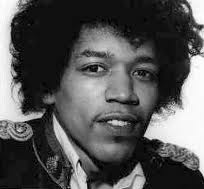
One night there was a band playing
that were very nerdish but thought they were great.
Jimi felt like jamming so he asked the guitarist if he
could sit in and use his guitar. Well, they didn't
have a clue who he was and said no amateur could sit in
with them. The boys will tell you that Jimi was
always a gentleman and would never say anything.
He just told them that he just felt like playing but he
understood. He never told them who he was.
The bass player felt bad and said that he could use his
bass if he knew how to play it and Jimi said yes.
Mitch Mitchell was with all of us and he asked the
drummer if he could use his drums and the answer was yes.
All that was left was the snotty guitar player who
hadn't a clue. Well, they started playing and Jimi
played the bass like it was a lead guitar and Mitch was
drumming like mad when all of a sudden
the hick band member
shouted "holy shit it's Jimi Hendix. With
that he turned to Jimi and begged him to use his guitar
:-)
Jimi and his
girlfriend and Mitch took me there for my 19th birthday
to hear BB King. It just so happened that it was
BB's birthday too. Jimi surprised us with a cake
and BB took me on stage with him to sing me Happy
Birthday.!
|
|
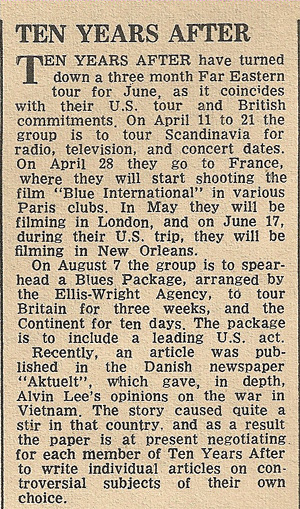
|
Record Mirror March 23, 1968
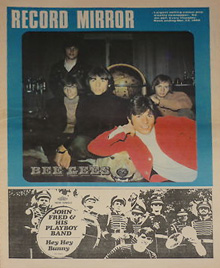
|
30th, March 1968
Ten Years
After on the French TV show "BOUTON ROUGE"

Their set included: Rock Your
Mama, Portable People, Hear Me Calling, I May Be Wrong, But I
Won't Be Wrong Always
These songs were from the groups
second and third albums. The color and sound from their
recorded performance is excellent. The above photo is from that
show.


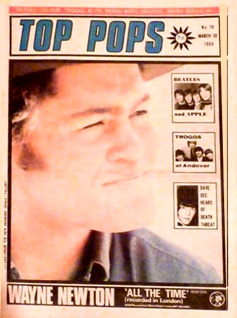
March 30, 1968
Early Alvin Lee interview
|
April 5, 1968 – The Marquee Club – London, England
April 13, 1968 – Gladsaxe Teen Club, Denmark
April 20, 1968 – Pop Club Brondby, Denmark – also
featuring The Baronets – Tages and the Jeff Beck Group
|
|
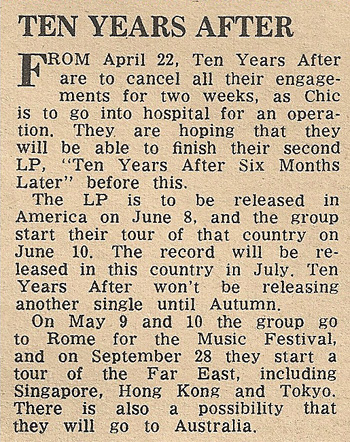
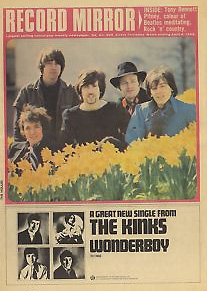
Record Mirror April 6, 1968
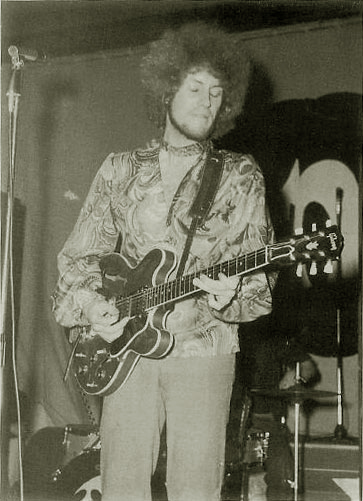
The following photos
were taken by JØRGEN ANGEL
at the "Teen Club", Denmark
13th April, 1968
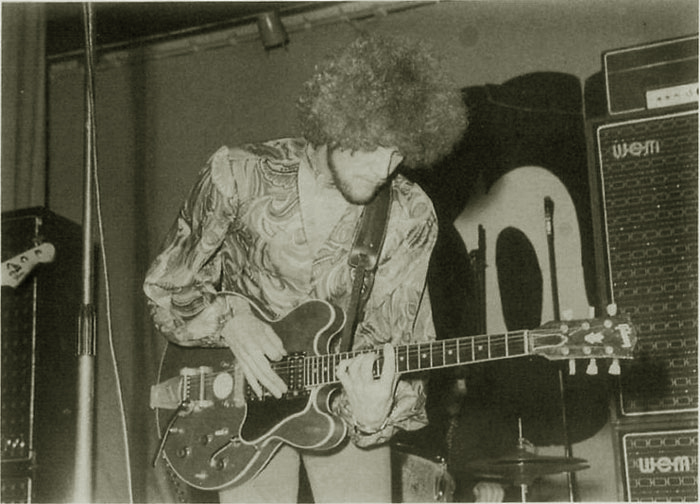
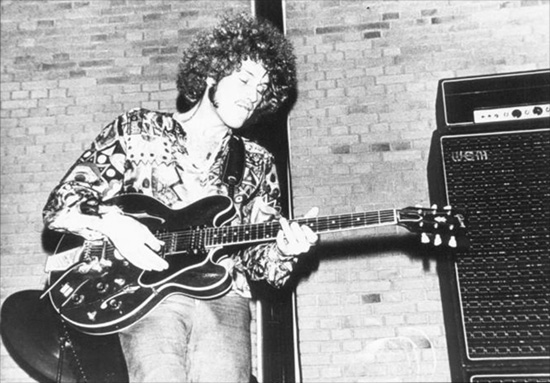
Guitarist Alvin Lee in action - big hands make it easy to
handle his "Big Red" Gibson - ES-335
Loose attire - eyes closed and totally in control
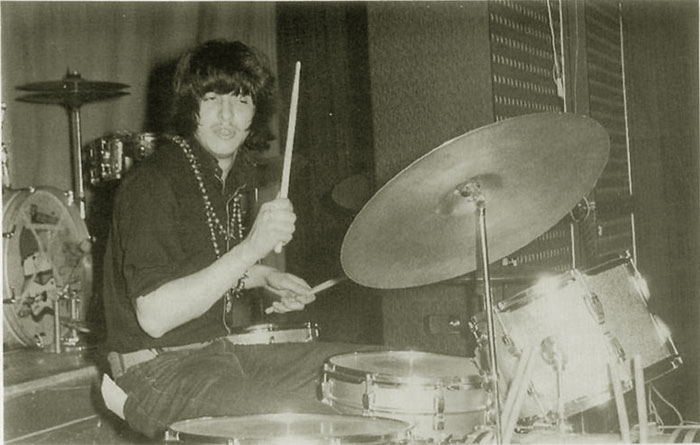
Ric Lee on the drum kit, his solo's were much shorter and much
more intresting than Ginger Baker's. Ginger's drum solo was
called "Toad" from the main character in the book " The Wind In
The Willows" by Kenneth Grahame. While Ric's later claim to
fame was his famous drum solo called "Hobbit" from J.R.R.
Tolkin's trilogy "Lord Of The Rings". But during this
time period, Ric's drum solo was called - "Shantung Cabbage".
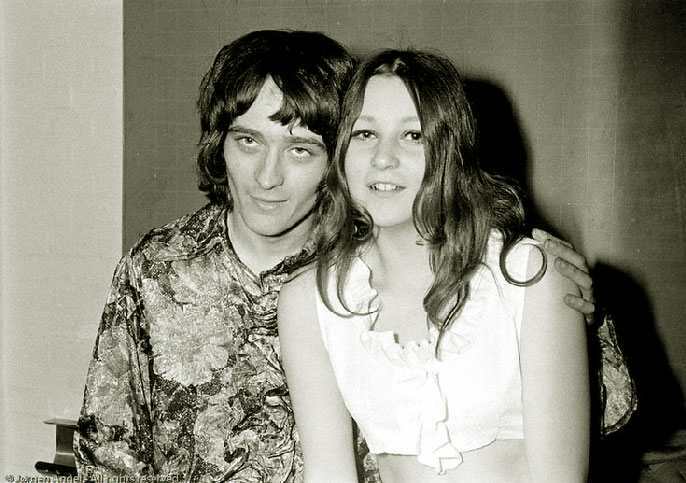
A very young Chick Churchill and an equally young looking lady
friend
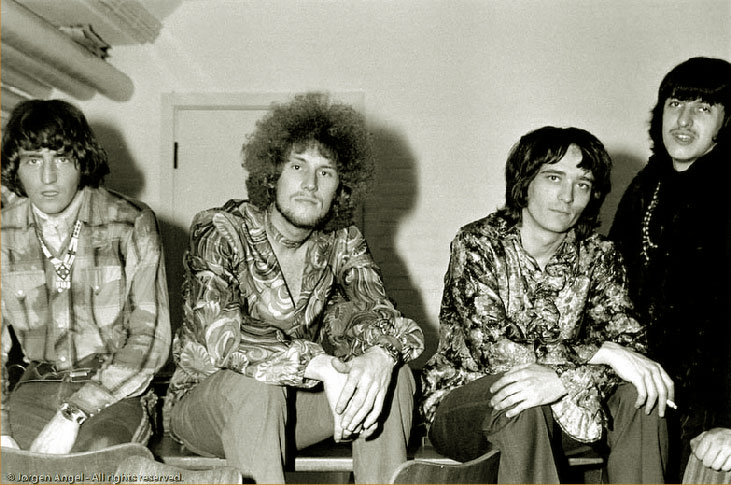
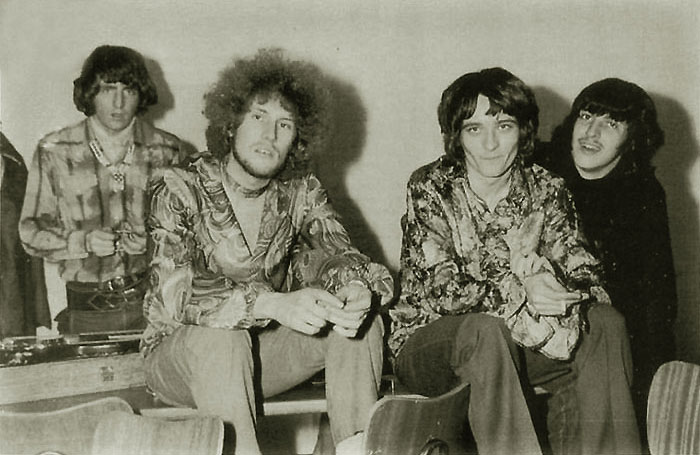
The photo above and the one below are very much alike. Yet different
enough to be of interest
SMILE BOYS - it's a long way to the top if you want to Rock `n´
Roll
|
April 1968 -
Beat Instrumental, No. 60


|

May 1968 - Single "Rock Your Mama",
France

May 1968 - Single "Rock Your Mama / Spider In
Your Web" ( !! ) , Sweden

May 1968 - Single "Rock
Your Mama / Spider In Your Web" Belgium
| 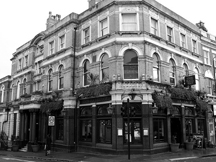
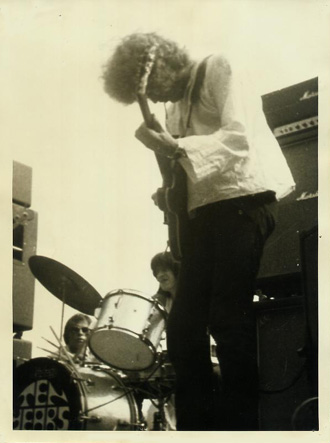
West Hampstead Railway Station - The
Home of Klook's Kleek
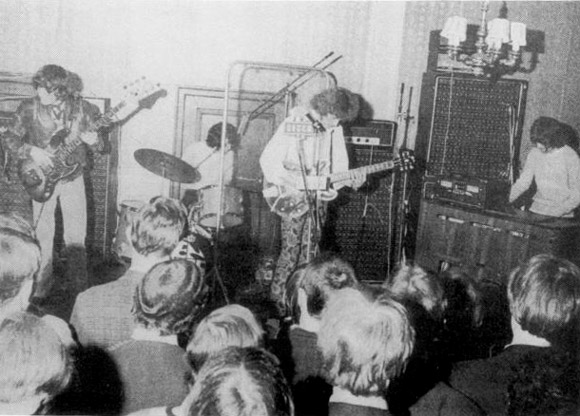
Recording "Undead"
at Klook's Kleek, 1968. A packed little room with sweat
dripping down the walls and sound pounding off of them too,
just the way the band likes to perform, with everyone
listening and being a part of it all. As you can see from this
photo, Ric Lee's back was to the wall, how he could play drums
that way is beyond me, and that little screen guard had to be
placed between him and Alvin Lee for the recording.
Note from Dick Weindling:
TYA played four gigs at Klooks all during 1968. As
you know, the session on 14 May was recorded live with
cables running out of the door of the upstairs room of the
Railway Hotel, and into the Decca Studios which were next
door. This was the excellent 'Undead' album.
|
|
May
2, 1968 – Metro, Birmingham, England
May
4, 1968 – The University of Norwich, England
May 5,
1968 – Palazzo Dello Sport – Rome Italy
May
7, 1968 – Falconer Theater Copenhagen, Denmark – The set
list included the following songs: Rock Your Mama,
Spoonful, I May Be Wrong, But I Won’t Be Wrong Always,
Help Me and I’m Going Home – Also on the concert bill
were, Fleetwood Mac and The Fugs
May
9, 1968 – Gothenburg, Sweden
May
10, 1968 – Stockholm, Sweden
May
12, 1968 – Cat Balou Club – Grantham, England
May
14, 1968 – Klooks – Kleek Railway Hotel, West Hempstead
- London, England
Ten
Years After recorded their historic “Undead” album on
this night.
May
22, 1968 – Wigan Technical College – England
May
23, 1968 – St. Michael’s Hall – Oxford, England
May
24, 1968 – The Marquee Club - London, England
May
25, 1968 – Redditch College Worcestshire
May
26, 1968 – The Wooden Bridge Hotel – Guildford, England
June 3, 1968 – Belfast, Ireland – (The band plays on
the roof-top of a school)
June 7, 1968 – The Marquee Club – London, England
|
| June
3, 1968 - The little known Belfast (NI) gig
From Gary Moore: “Garry y McAvoy is an
old friend of mine. In his book he mentions a lot of
gigs, for example, like seeing Ten Years After playing
on the roof of a school building, and I was also there
that night. Gary and I went to a lot of the same gigs
in Belfast. It’s pretty strange. Gary Moore and Rory
Gallagher were in the audience, in the play-ground
area”. (Continued) “I saw Ten Years After in 1968.
They were amazing! They were playing on the flat roof
of a school on Belfast’s Grosvenor Road. They basically
did the entire set that you can hear on the “Undead”
album.
I always thought what a shame that
Alvin Lee and the band, including Leo Lyons, Ric Lee
and Chick Churchill were equally the best there was in
Britain at the time. They should have been recognised
in their own rights. I also think that they were far
better back in 1966, than they were years later
Question to Gary Moore: Gary, you’ve
championed many blues greats, but what is your honest
opinion of Alvin Lee? “I was very impressed with all
that Ten Years After stuff, “Hear Me Calling”, etc. So
I went to see him playing this weird roof-top gig in
Belfast.
"Re the roof top gig. It was
not the LSE. The gig was on a
school roof in Belfast played
June 3rd 1968. So far as I
recall, Schoolboy Rory
Gallagher's band supported us.
To my knowledge it's the only
Time TYA have played in Ireland
and the only time we've played
on a roof."
This from Leo Lyons when asked
about this unique concert.t.
|
|
June 13, 1968 –
Ten Years After arrive in America
for
their very first visit, at the personal request of
concert promoter Bill Graham. It will be a seven week
tour.
June 14th to the 16th – 1968 – Ten Years After is booked
at The Cheetah Club in Venice, California
June 22, 1968 - Phoenix, AZ - Travelodge
Theatre, with Grateful Dead
June 24, 1968 – The Band Plays At – The Whiskey A –
Go-Go – In Hollywood, California The Opening Act Is
Alice Cooper
June 28th to the 30th 1968 – The
Fillmore Auditorium – San Francisco, California
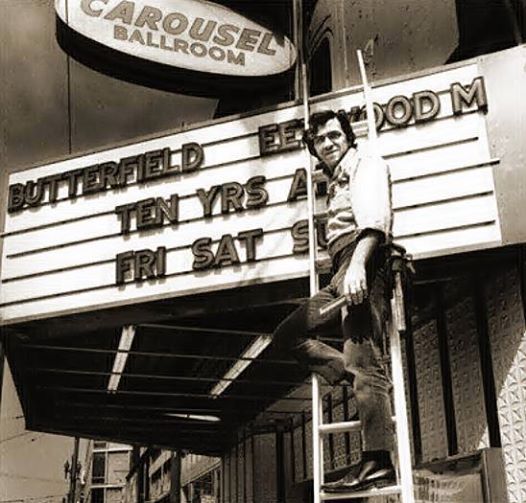
According to Christopher Hjort:
Bill Graham asked Michael Bloomfield and others to join
the Paul Butterfield Blues Band and Ten Years After with
Alvin Lee - along with other guest artists on this
special occassion. The opening of the Fillmore West in
San Francisco, California - it was formerly known as the
"Carousel Ballroom".
July 5th, 6th and 7th
1968 – At The Fillmore West – San Francisco, California
July 10, 1968 – Los Angels, California – Ten Years After
perform “I Want To Know” at the “Groovy Show” of
the KHJ - TV Station, Santa Monica, Los Angeles.
The Groovy Show was a half-hour live dance-program aired on weekday afternoons on KHJ-TV Channel 9, in the Los Angeles, California market from 1967 to 1970. Almost little to no footage of The Groovy Show survives today.
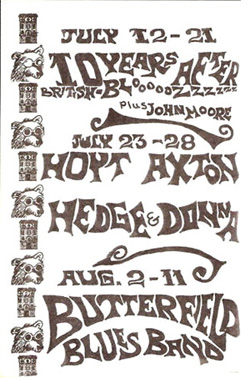
July 12th through the 21st 1968 –
At The Golden Bear, Huntington Beach California
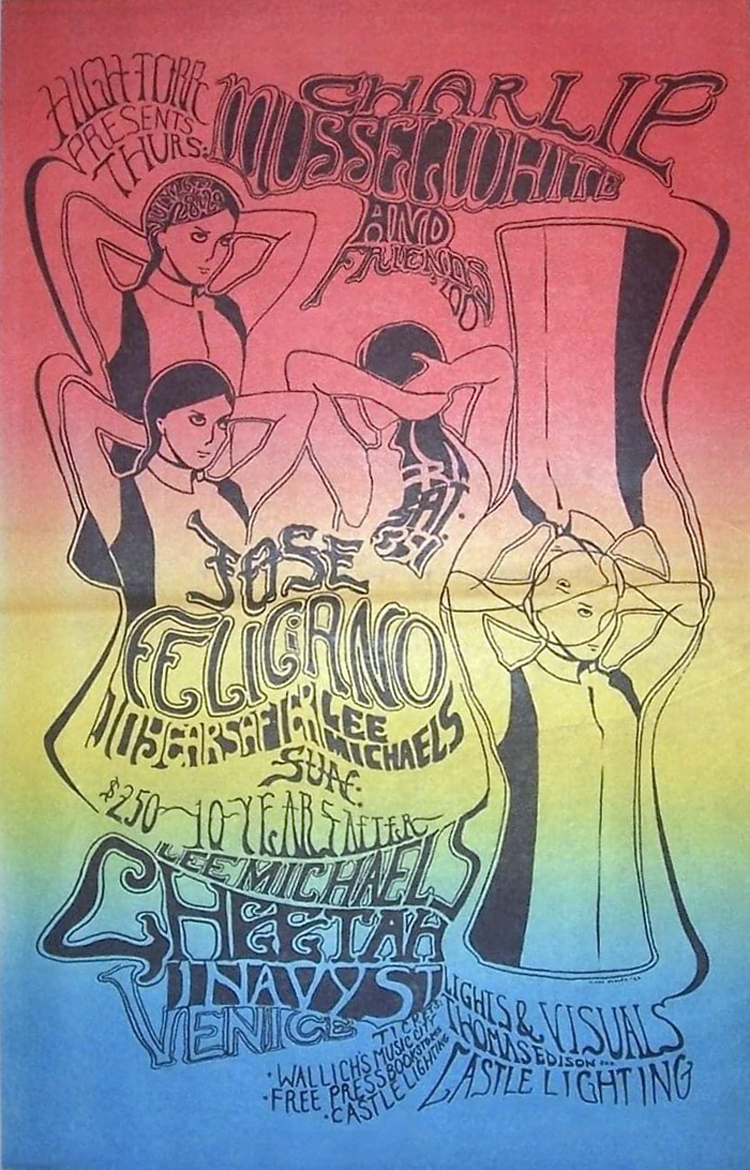
July 26th to the 28th 1968 - At The Cheetah
Club in Los Angels, California – with special guest,
Jose Feliciano
August 2nd and 3rd 1968 – At The
Newly Opened Fillmore East – New York City – New York
Featuring Big Brother and the Holding Company with Janis
Joplin also appearing, The Staple Singers.
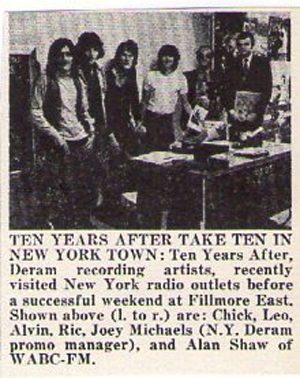
August 4th through the 6th 1968 –
At Steve Paul’s “Scene Club” New York City, New York
August 5, 1968 – Ten Years After spend the entire
day in the recording studio - recording session produced
by Mike Vernon from Blue Horizon Records - backing the very talented Guitar
Crusher (Vocals) and Jimmy Spruill (Lead Guitar) on the
song “Hambone Blues”. Then backing Garfield Love
(Vocals) and Jimmy Spruill on “Part Time Love”. While in
their evening hours, Ten Years After are playing at the
“Scene Club” when big surprise happens, Jimi Hendrix,
Mitch Mitchell and Larry Coryell join them on stage for
a joyfully extended jam session.
Leo Lyons talks about the
first Tour in the US:
https://www.youtube.com/watch?v=qxpKVYVPOSY
|
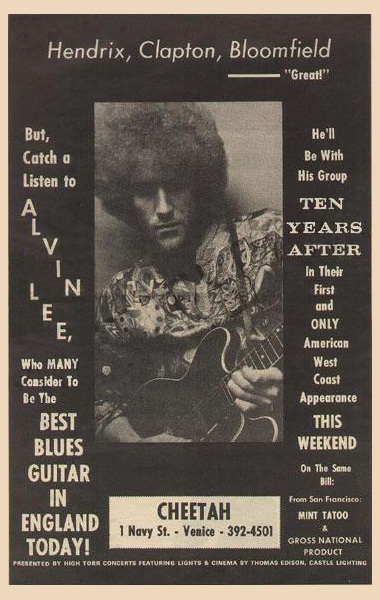
June 14, 1968 - "Cheetah"
Venice, California
|
Close to Santa
Monica - The Cheetah Club, 1 Navy Street Venice,
California
was previously
known as the
Aragon Ballroom until February of 1967 and located at
the Pacific Ocean Park Amusement Pier. Everybody who
was anybody has played there. The venue was closed down
after July of 1968. As the town officials were deciding
what to do with the vacant structures, a massive fire
broke out and answered that question for them… nothing
remains of the historic park that was built in the
1920’s except the beach front. (The photo with people
standing in front of the Cheetah Club was taken on
August 20, 1967)
|
|
“Ten Years After, when Alvin Lee had an
afro and a moustache”
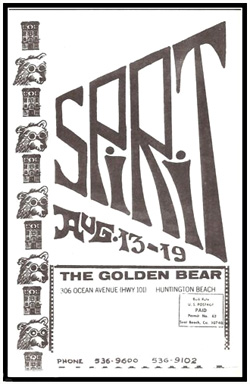
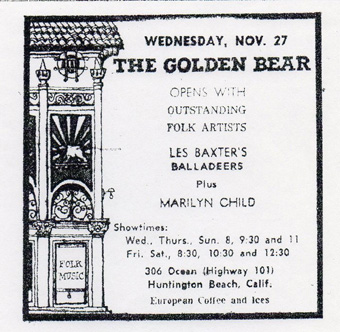
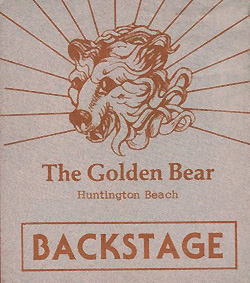 “The
Golden Bear Club” was founded by Harry Bakre in 1923
and located in Huntington Beach, California – Orange
County at 306 Ocean Avenue and now called The Pacific
Coast Highway and Main Street. It was a very famous
venue for anyone on their way up in the music business
or on their way back down. “The
Golden Bear Club” was founded by Harry Bakre in 1923
and located in Huntington Beach, California – Orange
County at 306 Ocean Avenue and now called The Pacific
Coast Highway and Main Street. It was a very famous
venue for anyone on their way up in the music business
or on their way back down.
In the 1960’s
the club was revered by musicians for being one of the
best sounding rooms in the country. “It was a great
place for musicians who wanted their music to sound
right and who wanted to be able to hear it right” says
Chris Hillman of the Byrds. Les Baxter’s Balladeers
featuring a young David Crosby, played there. Hoyt
Axton, The Lovin´ Spoonful and The Buffalo Springfield
– 1963 to 1966. Peter Tork of the Monkees worked as a
dishwasher at the club before becoming a famous
musician.
1966 to 1974 –
Jimi Hendrix – Janis Joplin – Neil Young – The Flying
Burrito Brothers – Jimmy Reed – Seals and Crofts and
Richie Havens all played there.
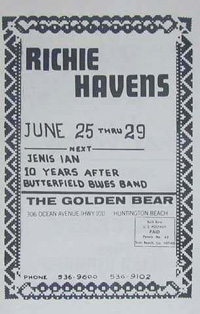
Richie Havens played
here June 25th through the 29th
1968. The Golden Bear was really a roadhouse and the
band stayed in cabins which, to be fair, were
sub-standard housing to say the least – complete with
bugs of all sorts and cock-roaches scattering when
lights were turned on.
Ten Years
After played here July, 12th through July, 21st 1968
1974 to 1986 –
Muddy Waters – Jerry Garcia – Patti Smith – Agent
Orange – Arlo Guthrie – Maria Muldaur and Peter Gabriel
played here. The last band to perform at the Golden
Bear was Robin Trower.
The entire
structure was demolished in 1986 and going with it, the
memories of B.B. King,
The Doors, Bob
Dylan and countless others who had the pleasure of
playing there.
The Bands and Musicians:
Robin Trower –
Chris Hillman – David Crosby – The Byrds – John Kay and
Steppenwolf - The Paul Butterfield Blues Band – Country
Joe and the Fish – Jimi Hendrix – Janis Joplin - The
Flying Burrito Brothers – Jimmy Reed – Arlo Guthrie –
Agent Orange – Patti Smith - Maria Muldaur – Muddy
Waters – Peter Gabriel – Seals and Crofts – Richie
Havens – Jerry Garcia – Hoyt Axton – The Lovin´ Spoonful
– The Buffalo Springfield – Peter Tork – Phobe Snow –
Shakti featuring Billy Cobham – George Duke – Stanley
Clark (what a great fusion band that was) – Tower of
Power – Taj Mahal – Jessie Colin Young – The Mamas and
the Papas – The Manhatten Transfer – Ike and Tina Turner
– The Steve Morse Band – The Dixie Dregs – Cecillio and
Kapono – Seawind – Poco – Steve Gillette – Hedge and
Donna – Doug Kershaw – John Hartford, Emmylou Harris and
the Hot Band – David Lindley and El Rayo X – Tracy
Nelson and Mother Earth – Spirit – Jimmy Witherspoon –
Robben Ford – Chris Isaak – The Beau Brommels – Leon
Redbone – Huey Lewis and the News – Charlie Musselwhite -
Popa John Creach – The Sir Douglas Quintet – The Chili
Peppers – Dire Straits - Elvin Bishop – Nicolette Larson
– Gary Busey playing with Paul Butterfield – Rick Danko
– The New Riders of the Purple Sage – Peter Tosh – Brian
Auger – Allan Holdsworth – Jimmy Smith – Fishbone -
Captain Beefheart – Al Stewart – Lee Ritinour – Stephen
Bishop – Albert King – B.B. King - Strange Daze – Dan
Hicks – Rick Derringer – Tommy Tutone – The Ramones –
The Ventures – Tim Morgon – Jessie Winchester – The
Spinners – Joe and Eddy – Dave Myers and the Surftones
(House Band) – The Guess Who – The Strawberry Alarm
Clock – Mark Turnbull – Charles Bukowski – The Average
White Band – Kris Kristofferson – Chicago - Carly Simon
– Ivan and Sylvia – England Dan and John Ford Coley –
Flow and Eddie – Dave Mason – Ken Rhoads – Neil Diamond
– Honk (Band) – Steve Goodman – Billy Boy Arnold - Joan
Baez – Bob Dylan – Wet Willie – The Mitchell Trio – John
Denver – Albert Collins - The Pointer Sisters – Van
Halen – The Busboys – Jose Feliciano – Crosby, Stills
and Nash - Jefferson Airplane – Gordon Lightfoot – Moby
Grape – Junior Wells – Buddy Guy - Les Dudek….One
(Local Band) – The United States Of America – Joe Byrd.
Comedians:
Steve Martian –
Lenny Bruce – Howie Mandel – Bob Duback – Cheech and
Chong -
Pat Paulson
Personal Memories:
“I loved the
Golden Bear years ago, I saw some of the best groups
there, the venue was small and the talent was huge”.
“Great memories
live on”.
“My girlfriend
and I snuck in one night and saw Canned Heat”.
“Hunting Beach
back in the 1960’s and 1970’s was filled with surfers
and hippies”.
“The Golden
Bear was an institution of Hunting Beach. Small venues
like that made you feel so invested in the performers
and their music”.
“I remember how
everyone reacted to the loudness of the bands, it was a
great time for music. For the musicians and audience.
Now, there are just too many people, it was a more
intimate thing back then”.
“I used to work
at the Golden Bear from 1969 to 1970 it was so much fun,
I miss those days so much. Janis Joplin with Big Brother
and the Holding Company. Steve Martin, so many cool
people used to warm up there before playing the Los
Angeles Forum”.
“It was a great
place, I heard “America” there … what a great night”.
“Cecllio and
Kapono, Seawind made me feel like I was back home in
Hawaii”.
“Steve
Gillette, Hedge and Donna, Richie Havens, Poco the best
venue ever”.
“Randy
Hansen, Dick Dale and Dire Straights are the shows I
remember”.
Update on the Golden Bear 2011:
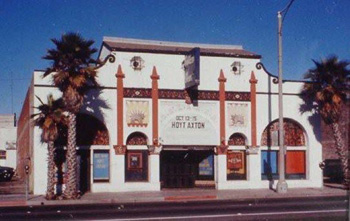
There is a
movement on to reinvent the past into the future. In a
reincarnation / resurrection of the old / historic
Golden Bear Club. A brand new building was to be built
on the exact same spot where the old venue once stood in
Hunting Beach, California. This was to be completed by
early to mid 2011. It’s now October 16, 2011 and this
dream has not yet materialized.
Their have been
some construction photos released of the area, but now
there is apparently a large black cloud impeding its
progress. Romantic Nostalgia has collided head on with
our Modern Bureaucratic Reality, as is stated here in a
current update about the situation: “Unfortunately, the
city of Huntington Beach was not economically supportive
of a new venue opening in their area, and the Golden
Bear project is on hold until further notice”.
Jon Reiser, one
of the club developers explained in a short email: “The
city passed several ordinances restricting new bars and
clubs from opening in the downtown area. The project is
on hold until it can go through the “Conditional Use”
permit process successfully”.
This after the announcements were made that they were
already accepting resumes to fill the following
positions: Bartenders, Servers, Hostess and Security
Guards. The newly planned venue is designed to
accommodate up to 600 people. Featuring live
entertainment of all kinds.
|
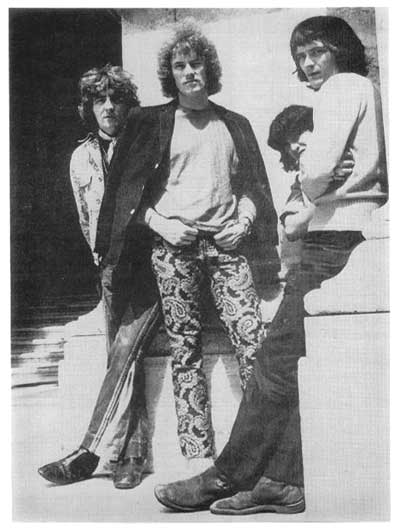

Ten Years After, early 1968

Release of TYA's 2nd Album "UNDEAD"
|
The Telegraph,
"From 1968 Disc Desk".
Ten Years After – Or
How To Stay Alive Underground:
The
Words "Ten Years After" were chalked in bold capital
letters across the window of the recording studio’s
control room. Record producer Mike Vernon sat
tensely on a stool and talked into a hand-mike, like
a flight control officer bringing an aircraft in for
a perfect landing. Indeed it sounded as difficult.
"I think we need to have more echo from the guitar,
instructed Mike Vernon. "Not again !" Pleaded a
voice from the studio, writes Stylus.
An
understandable reaction. For four young musicians,
who call themselves "Ten Years After", were nearing
their eighth hour in the basement studio. Ten Years
After may mean nothing to the viewers of
television’s "Top of the Pops" and listeners to Tony
Blackburn’s breakfast show, but in other less
publicised circles, they are big business. For Ten
Years After are Britian’s top underground groups,
they are not consumed with making three minute hit
tunes.
Taking a short break from the session, the
group’s drummer, Ric Lee explained:
"At
first we planned to make three minute singles,
tailored for the radio and television, but we found
that our audience liked our longer material, and we
were far happier playing it."
Ten
Years After stuck to their go-it-alone musicial
policy, in a business that was notoriously
unsympathetic to groups who cock-a-snoot at the Top
Ten. While most groups hope to make an L.P. after
several hit singles, Ten Years After kicked their
recording career with an album.
And
within nine months of forming the group, they were
flying to America for a two week promotional tour.
This month they have had a new album, "Ten Years
After – Undead" released and they leave again
shortly for a two month tour of North America.
Outlets:
Underground music according to Ric Lee, was played
by bands who did not necessarily follow the
Tin-Pan-Alley blueprint for a hit record. Ten Years
After’s road to uncrowned stardom began, like so
many other underground groups, at the National Jazz
and Blues Festival last year (1967). But it was the
American Trip and their first L.P. which really
established Ten Years After. Said Ric: "In America
there is a far bigger audience for underground
music." There were more outlets. Certain radio
stations played nothing but underground music. Disc
Jockeys would play a group’s entire album. Ten Years
After themselves had issued only one single against
two albums. "A record in the Top Twenty means a
group becomes nationally known, and they get more
money for appearances.
But
it is not always the best thing that can happen to a
group, said Ric Lee.
|
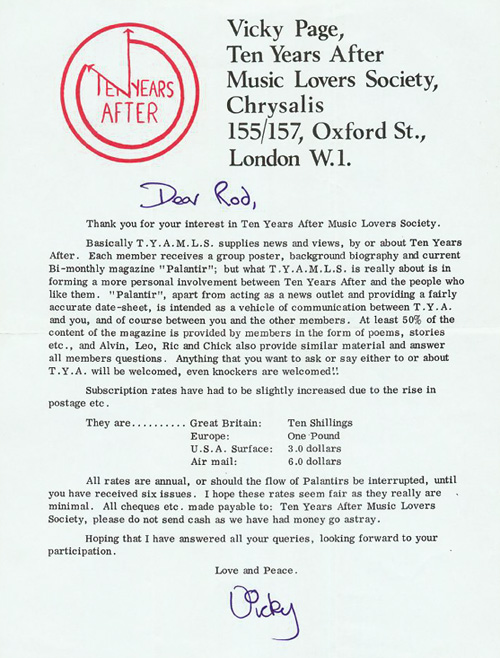
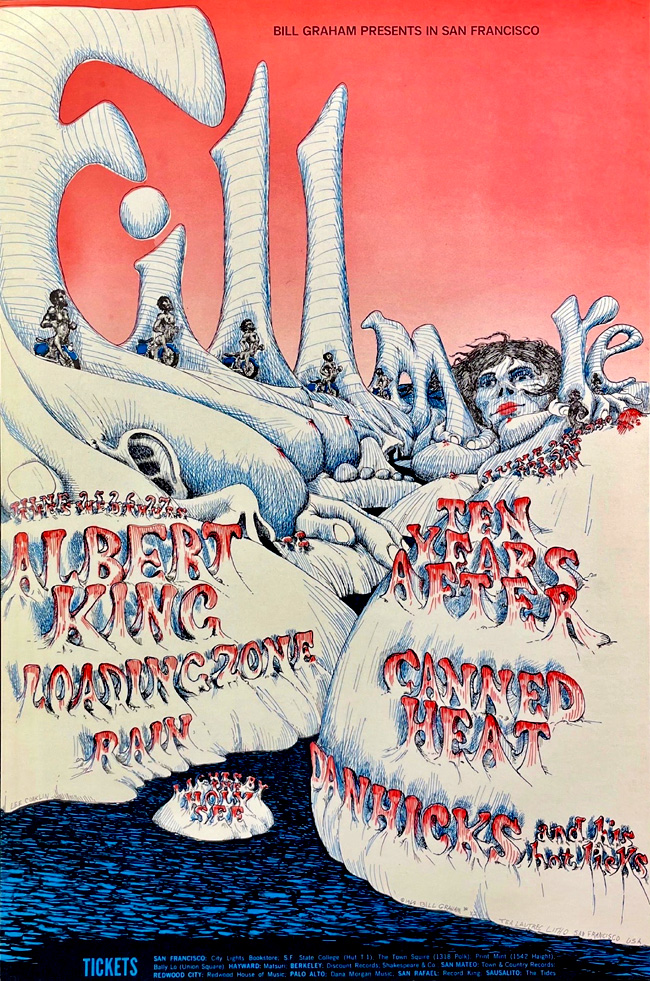
To Rod Steanson
28 - 30 June 1968 - Fillmore
West, San Francisco
Artist: Lee Conklin
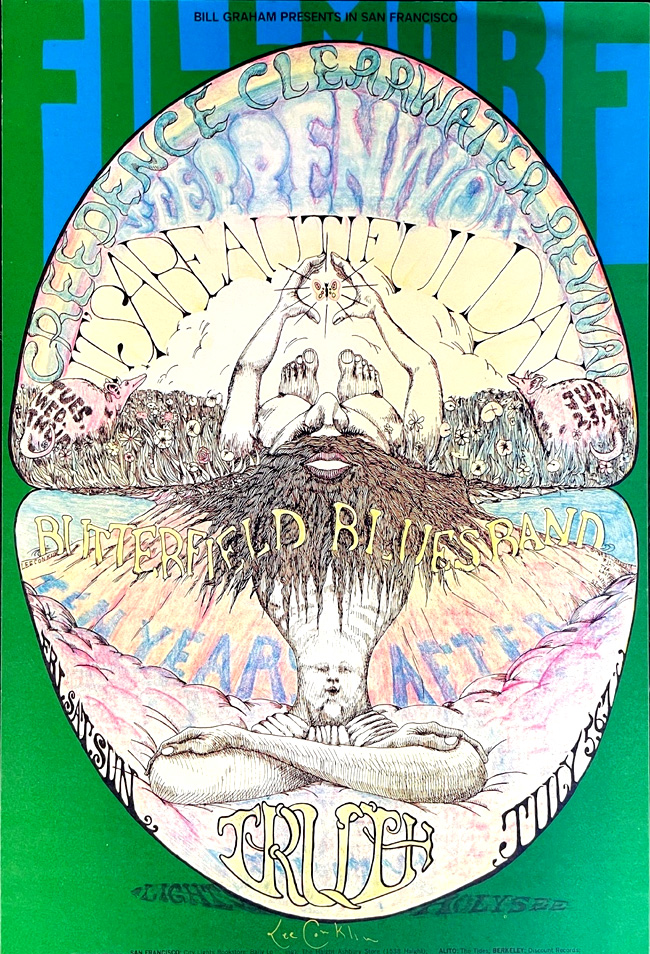
5 - 7 July 1968, Fillmore
West, San Francisco
Artist: Lee Conklin
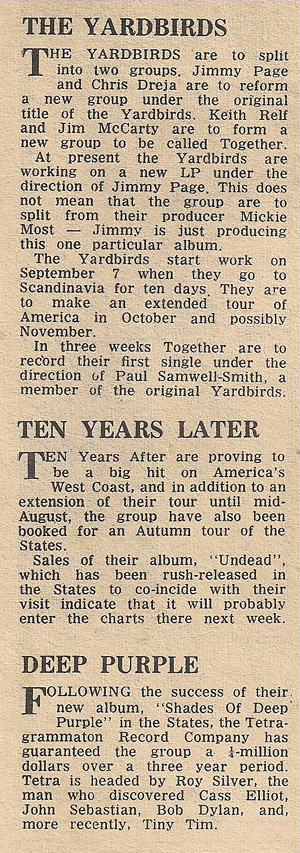
Record Mirror July 20, 1968

Cash Box - July 20, 1968

July 1968, BEAT
INSTRUMENTAL, No. 63 (England)
Cover, page 26 & 27


1968, July 26 - 28
Cheetah Club, Venice -
Concert Poster or Handbill
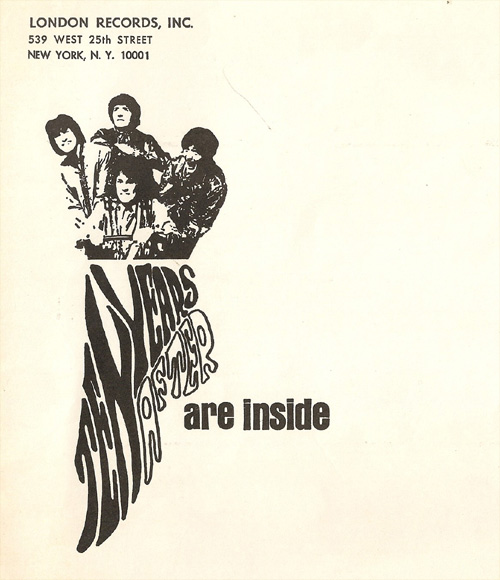
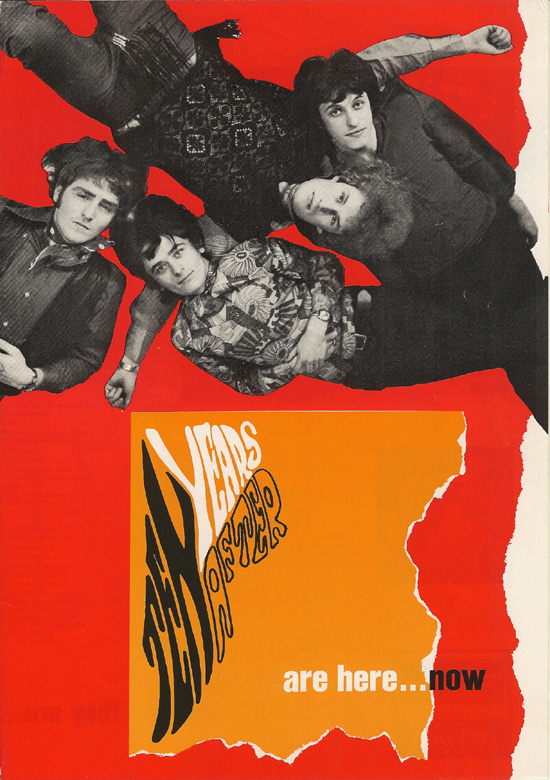
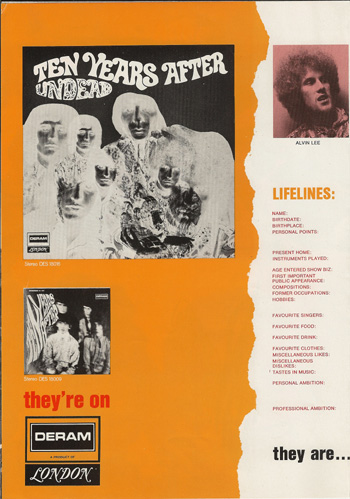
| The
following contribution by GARY HOLDINGHAUSEN
to whom we respectfully thank
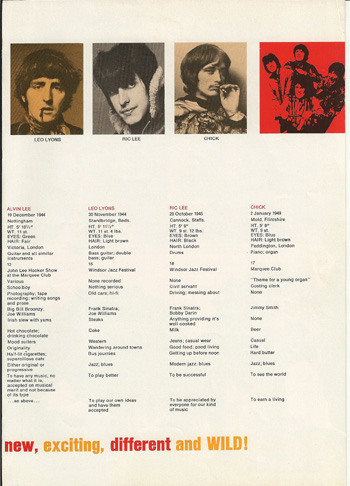
|
click picture to read
the PDF file |
click picture to read the PDF file |
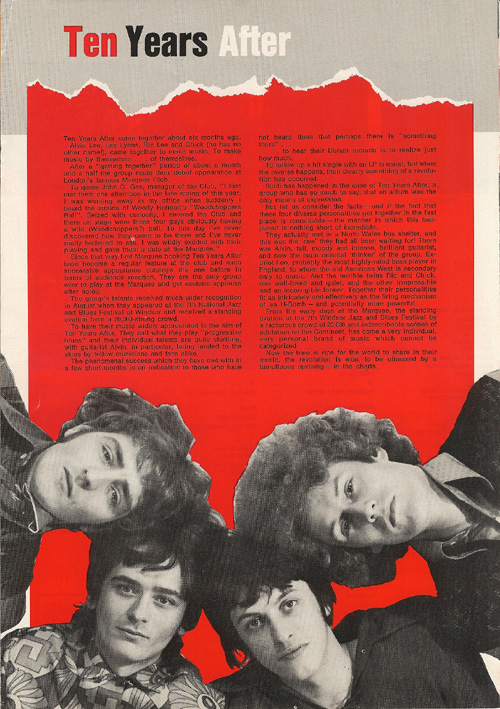
|
click picture to read the text |
|
|
The English
Band “Ten Years After” Turned Loose On America
From June 13 to
August 7, 1968 - Journal Report by Drummer Ric Lee
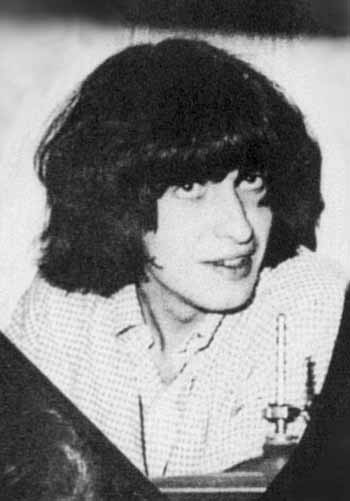 June 13, 1968 June 13, 1968
We arrived at
Los Angeles airport after a two day journey across the
Atlantic Ocean. I say two days because that was the
time it had taken! The flight was scheduled to take
between ten to twelve hours, but after stopping in
Winnipeg, Canada to re-fuel, the starter motor on the
number four engine would not work, so we had to stay
there overnight while it was being repaired. We were
met at the airport by London Records represenitive
Gerry Hof, who had a Cadillac Limousine and taken us
directly to the hotel.
June 14, 1968
We arrived at
The Cheetah Club, located in Santa Monica California.
The agency had agreed to supply the equipment needed,
but hence, no drum kit and no leads, that are necessary
for the Chick’s organ to work. It was panic until it
was time to go on stage, then suddenly, a drum kit
appeared and a very grim looking one at that, and the
organ worked as well. Thanks to our amazing Road
Manager that “Andy”. Anyway, in the words of the
famous song, “Things Get Better Baby”, as you’ll see.
June 15th
and 16th
We’re still
playing at The Cheetah Club.
June 17th
through the 20th
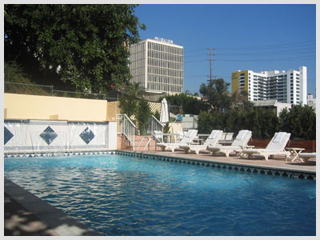 You’ll find me
lazing in the Summertime sun at pool-side at the hotel,
and trying desperately to get tanned, in order to cause
jealousy upon my return to dreary old England. (ha-ha). You’ll find me
lazing in the Summertime sun at pool-side at the hotel,
and trying desperately to get tanned, in order to cause
jealousy upon my return to dreary old England. (ha-ha).
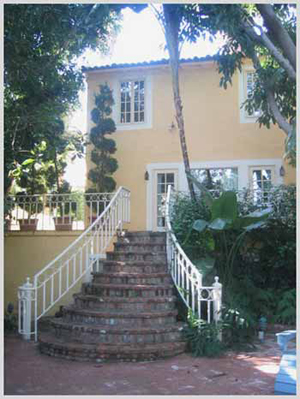
By the way, we
stayed at the “Sunset Marquis” which is just off the
famous Sunset Strip.
All members of
the group are going off with various odd people, on
short sight-seeing trips and some other activities.
Chick Churchill
was booked by local Police for “Jay Walking”. Although
he pleaded ignorance of the law to the court, it was of
no use, (as it also states the following: “Ignorance of
the Law is no Excuse”). Ric Lee, I met
Tiny Tim and was given a present, his brand new record
album. He’s a tremendous, sincere and honest character
and you won’t believe it when you see him in person
this coming September.
June 21st
and 22nd 1968
We set out at
approximately 3:00 PM this afternoon, heading for
Phoenix, Arizona, which is about 300 miles east from
Los Angeles. We stopped on the way, at a place called
Indio, this was at about 9:00 PM in the evening, and
the current temperature was at 100 degrees. Logically,
everybody bought ice-cold-beer…and it’s not at all like
the English variety mates! We arrived in
Phoenix at about 12:00 midnight or a little later. On
the way, our car was very nearly run off of the road by
a load of rowdy / noisy cowboys – real ones – in
another car.
June 22, 1968
We left Phoenix
to go sight seeing at the famous Grand Canyon. “It’s a
bloody big hole in the ground that they’ve got there.
Chris Wright, our faithful manager was running around
with his movie camera, looking a lot like Walt Disney
himself.
June 24, 1968
At
approximately 6:00 AM, we arrived back in Los Angeles.
That night we played at “The Whiskey –
A – Go-Go”. Very blasé audience there, not really a
good scene. However, after
our appearance there, the record shop across the street
sold out of our “Undead” L.P. All weird hippy types
were sitting on the pavement, outside of the “Whiskey”,
while getting quietly stoned, and becoming a tourist
attraction for “Normies” the normal people who came
passing by in their cars to take a look.
June 25th
and 26th 1968
More lazing in
the sun for me. There’s a special trip in the works for
Leo today. He’s going to “Nudie’s” which
is a Clothiers shop that specializes in Western
Clothes, holsters and jackets and accessories of all
kinds. By the way: Nudie’s is the name of the guy who
owns the store.
June 27, 1968
Flew from Los
Angeles to San Francisco. I soon learned that there was
a sudden and unexpected drop in air temperature. It
went from 90 degrees down to 54 degrees.
June 28, 1968
to the 30th
We opened at
The Fillmore West along with “Canned Heat” on the same
concert bill. They are a
tremendous group and we all became firm friends right
away. They are much better live on stage than on their
L.P.’s – There was a tremendous reception for Ten Years
After at the Fillmore, we played to a full house every
night.
July 1, 1968
through the 4th
I spent the
time seeing and meeting people in San Francisco and did
radio interviews on “Underground” radio stations.
July 5, 1968
through the 7th
At the new
Fillmore West, which was formally known as “The
Carousel Ballroom” and taken over by Bill Graham and
then made into the Fillmore Auditorium – was closed in
part to building political pressures. We played with
The Paul Butterfield Blues Band and with dear old Peter
Green. There was a tremendous reception for everyone.
On the opening night Bill Graham invited all of his old
friends to come down and Jam together.
This included
Electric Flag with Mike Bloomfield, which also included
Buddy Miles on drums for Electric Flag – Elvin Bishop
who is now ex - Paul Butterfield Blues Band and Big
Brother and The Holding Company featuring Janis Joplin.
However, as the
champagne was provided in the dressing rooms, everyone
was too drunk to jam at all. Janis went on stage, got
to the microphone and proceeded to collapse. A good
time was had by all. I found The Paul Butterfield Band
to be very, very good. There’s also a big jazz
influence in San Francisco.
Manager Chris
Wright was taken to the hospital suffering with acute
appendicitis.
July 8, 1968
through the 11th
Got back into
Los Angeles, on the 10th, then we did a
colour T.V. show called, “Groovy Show”
we performed a track from our first L.P. – “I Want To
Know”.
July 12, 1968
through the 21st
We opened at
“The Golden Bear” located at Huntington Beach
California. On the first day we indulged in the sun,
sand and surfing. On the second day, everyone was
complaining of sunburn. The Golden Bear is a small club
that holds a maximum of 200 people, but with very good
audiences. All of the other placed that we played at,
held from 1,000 to 2,000 people maximum.
Three girls
arrived one day to do an interview for a “Teeny Bopper”
magazine, and we somehow ended up……censored ! (use your
imagination).
August 7, 1968
Returned home – We’ll probably do it all again in
September, when we make our second and more extensive
tour of America. |
2 & 3 August 1968 -
Fillmore East


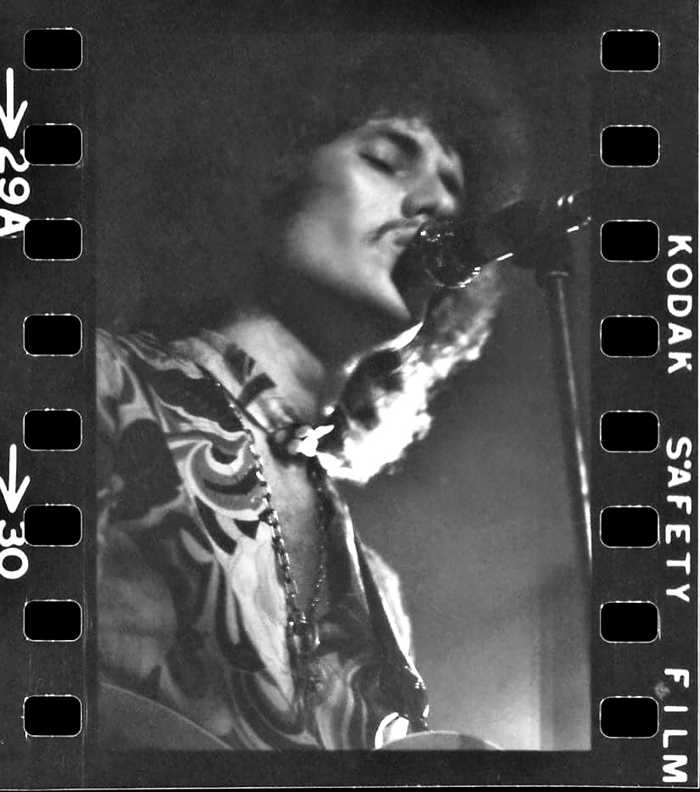
5 August 1968 - The
Scene, New York City - Photo: Jeff
Kliman
- Both Photos, above and
below - Contribution by Marcel Aeby -
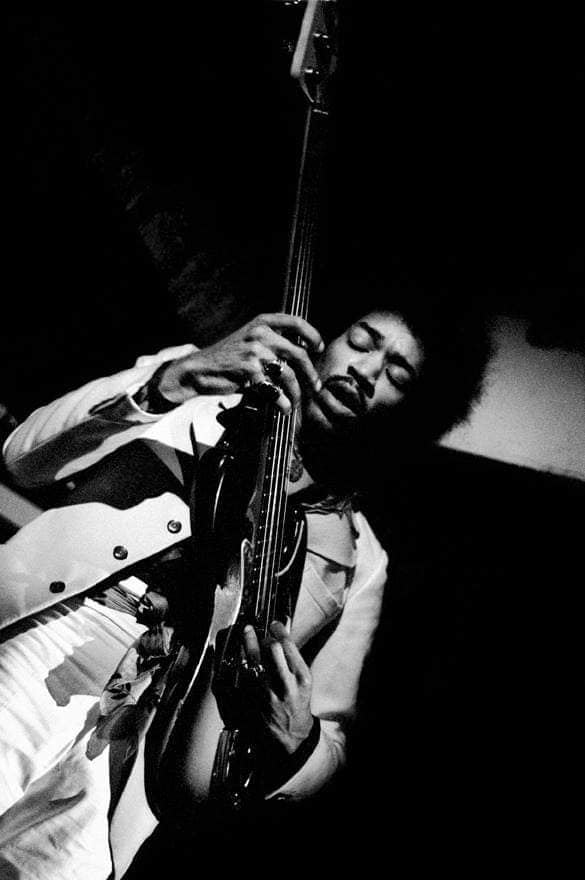
5 August 1968 - The
Scene, NYC - Jimi Hendrix plays Leo Lyon's bass
- Photo: Eddie Kramer
|
My
View Of America - 1968 -
By Leo Lyons
America
was I think, the best thing that could’ve happened to us as a band,
and also as individual musicians. The musical feel of the States, and
the change of environment has really instilled in us an added
enthusiasm, new ideas, and made us a much tighter working unit.
We’ve got our heads together so to speak.
As
a band that relies on the audience in order to play at our best, as no
doubt some of you will have noticed if you’ve seen us on a bad gig,
it was great to find American audiences as good as our best British
ones. One thing we did in America that we haven’t done so much here
in England is long jamming. Everyone gets up and has a blow with
everyone else until it’s difficult to tell who’s entertaining who.
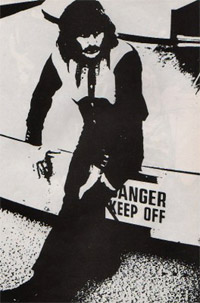
On
one particular evening in New York City, there were about eight of us
up on stage,
included were Jimi Hendrix, along with Mitch Mitchell,
with Larry Coryell, Janis Joplin, an unknown flute player, and two
other guitarist I didn’t recognize at all. We all ended up doing a
two and a half hour set, that was really just one long number.
No
one seemed to mind in the least if the show runs over time, as we did
a gig at the Fillmore West in San Francisco with Peter Green and Paul
Butterfield. We all ran over our allotted time slots, and the show
that was suppose to end at 2:00 AM still had Paul Butterfield raving
away at 4:45 AM in the morning. That’s the Fillmore for you, I only
wish that sort of thing would start catching on over here in England.
Everything
being considered, it was a terrific trip, and the fact that our
“Undead” album has made it into the American Music Charts, has
just added icing to the cake!
|
|
My View of America –
The First Tour 1968 For Ten Years After
By Chick Churchill
I think the
first thing that struck me about the U.S.A. was, that
the ideas I had formulated and my opinions about it
before I arrived there, were completely wrong. That is
to say, the people weren’t ignorant, nor were they
self-appointed intellectuals, which were the two images
that most American’s conveyed to me when I met them
here in England. The people in the States can either be
warm and friendly, or very hostile, depending on their
age, upbringing or whether they know if you’re English
or not. In fact, an Englishman’s biggest asset in the
States, is being English, this is not a general feature
of the U.S.A. but is concerned mostly with the younger
generation.
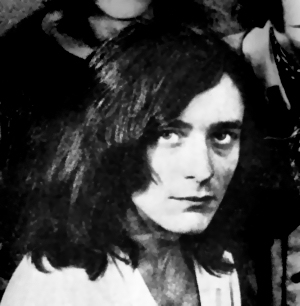
While in
Phoenix, Arizona, we seemed to accumulate three,
short-haired, Stetson – Cowboy’s who seemed to take
offence that we had long hair and let us know it by
yelling abuse and oaths from their adjacent car. Apart
from that, we had very little trouble and spent most of
our time pulling funny faces at pornographic looking
women, taking photos, who I’m sure must have thought we
were extras for a film about vagrancy, by the looks on
their faces.
On the music
side, the U.S.A. has boundless opportunities because
the American youth gets itself so involved with what’s
happening on stage. After awhile you find yourself
getting much more involved with what you’re playing,
and after eight weeks, I found myself returning to
England with many more contemporary views on my own
playing and I am now trying to get my thoughts from my
head to my fingers, instead of vice-versa. I other
words, I’m now not following certain patterns which my
fingers have been wandering over since the beginning of
Chick Churchill being an organist and not a bank clerk.
All in all, America has been a great inspiration to all
of us, and we all look forward to the musical
developments which could happen in the future. Chick is
using a Hammond M.2. at the present time, but hopes to
eventually replace it with a Hammond C.
|
|
August 1, 1968 – Ten
Years After at Queens College Colden Auditorium –
Flushing, New York
From Cousin
Steve
I was still in
high school when some of my friends from the Queens
neighbourhood, that I grew up in had scored tickets to
see Ten Years After at Queens College’s Colden
Auditorium.
At the time, in
the USA, Ten Years After had two LP’s out, the big one
being Undead, the live at Klooks Kleek album that first
gave us “I’m Going Home,” and later immortalized at
Woodstock when Alvin said, “I’m Going Home by
Helicopter”. Slack jawed by Alvin Lee’s guitar work, I
thought I’d never pick up a guitar again. I remember
saying that when an older guy from the neighbourhood
drove us home that night. The name Ten Years After,
back in the early years seemed to refer to the bands
ability to handle old rock and roll songs like “Blue
Suede Shoes” and other songs that rocked the charts ten
years earlier. Later on in their career, the band
covered Little Richard’s hard to find song, “Going Back
To Birmingham”.
The bands first
LP was the self titled Ten Years After, seemed to have
been modelled after the Elektra LP called, “What’s
Shaking” picking many of the same songs like “I Can’t
Keep From Crying” – “Spoonful” and “I Want To Know”.
The LP also included the blues song, “Help Me” and I
recall Alvin smoking his cigarette during the
introduction, and then placing it in the head of the
guitar, so that he could sing. I saw the band many
times, even after they started to become more famous,
but the Undead LP is still a scorcher. The circle of
friends from the block would play this along with LP’s
of the day like, “Blood Sweat and Tears” “The Who” and
the first Crosby, Stills and Nash” album. At the
Fillmore East, when Alvin Lee screamed, “I want to ball
you”…. One of the kids from our block, S.K. fell off
his chair.
Also at this
concert was Dan Axelrod – he reports the concert took
place on August 1, 1968
|
|
TYA back in the UK
|
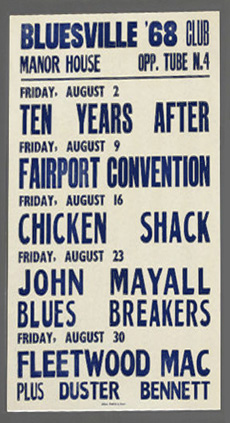
2nd August, 1968
Bluesville '68 Club - Manor
House, London
|
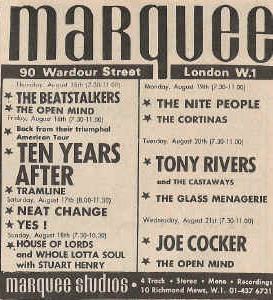
3rd August, 1968 |
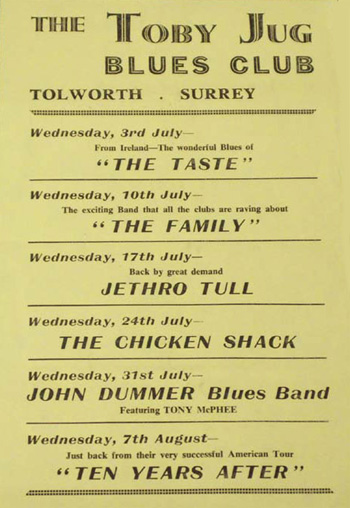
7th August, 1968 - "Just back from their very successful American Tour"
August 7, 1968 – Toby Blues Club – Tolworth, Surrey,
England
August 9 to 11, 1968 –
Kempton Park – Sunbury Middlesex, England
August 12, 1968 – Cooks Ferry Inn – London, England
August 16, 1968 – The Marquee Club, London England
August 17, 1968 – Klooks Kleek – West Hempstead –
London, England
August 23, 1968 – The “California Ballroom”, Dunstable,
Scotland
August 24, 1968 – A Free Concert In “Hyde Park” –
London; England
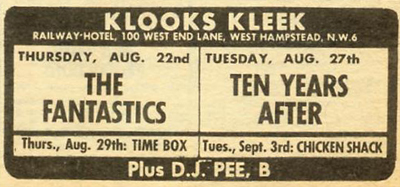
August 27, 1968 – Klooks Kleek – West Hempstead -
London, England
August 30, 1968 – The Marquee Club – London, England
August 31, 1968 – At The “Middle Earth Club” – At The
“Roundhouse” – London, England
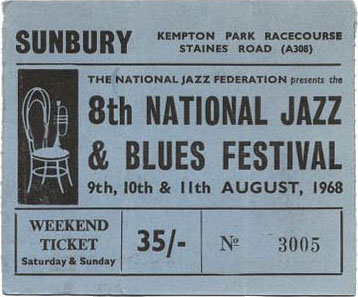
August 9
- 10 - 11, 1968
National
Jazz & Blues Festival / Sunbury Festival
 |
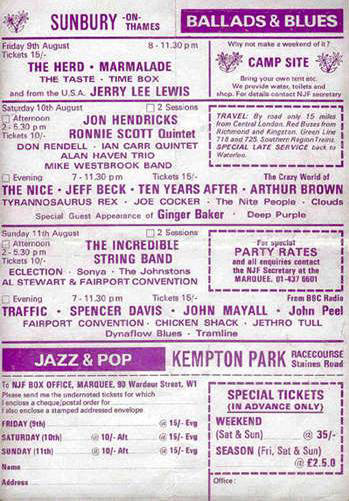
9th - 10th - 11th August
1968
|

|

|
August 10, 1968
If you haven’t heard Ten
Years After on the radio, don’t be surprised, said
Alvin Lee.
The trouble is that the B.B.C.
won’t play our material, because the numbers are too
long. Forget about the B.B.C. go and buy their new LP
Issued this Friday called Ten Years After "Undead" – A
Live Album.
After Ten Years After’s
recent success at the Fillmore East in New York. It was
interesting to see if they could emulate their success
at Sunbury. Before their spot, guitarist Alvin Lee
confided in me: "I’m a bit worried about tonight.
Audiences in America, are used to groups like us
playing one song for three quarters of an hour or more.
But I don’t know if they are ready for it tonight !"
Alvin need not have worried. Ten Years After got a
tremendous ovation at the end of their one number. Yes,
one number folks! Called "Spider In My Web" it started
off as a slow, funky, blues and picked up tempo to a
medium groove.
Then came a series of
startilingly inventive solos from each of the boys and
each unaccompanied. Chick Churchill played a great solo
on organ. Leo Lyons showed us what it was all about on
bass. Drummer Ric Lee played an incredible solo, using
a mike as a drum stick which gave a great variety of
sounds. Alvin lee’s guitar solo was a beautiful mixture
of blues, Spanish style, and sound effects. After each
solo, it went back to that rockin’ rhythm.
The audience really responded when the group went
into their final part – a storming boogie tempo which
grabbed everyone.
|
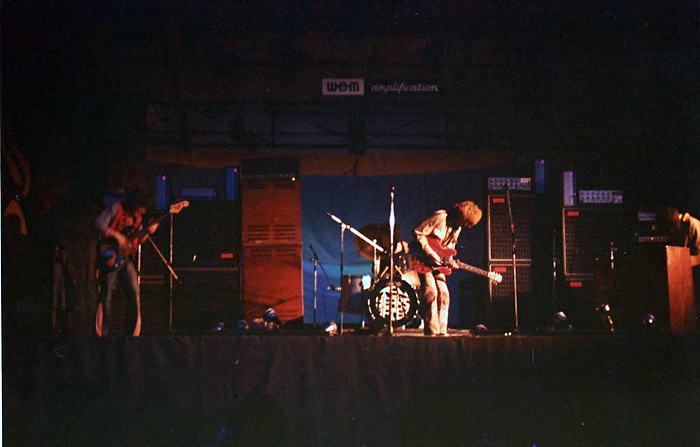
Sunbury Festival 1968
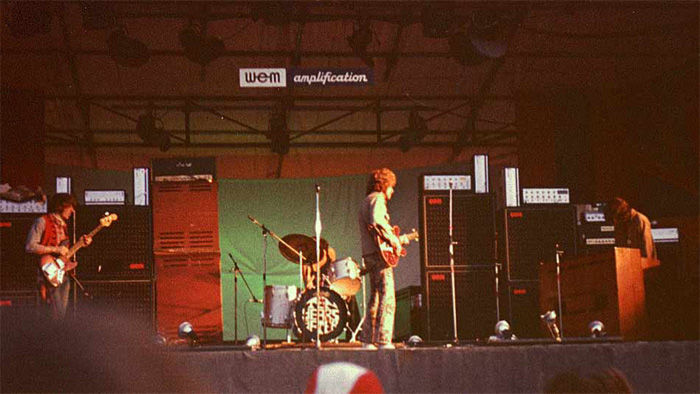
Back In
Those Early Days - It Was Cooperation Over Competition:
“When The WHO came up with a 1000W sound
system, The Pink Floyd wanted a 2000W system. It went a bit
mad”. “For The Rolling Stones In The Hyde Park Concert, in
the summer of 1969, Watkins had to borrow back some of the
equipment that he had sold to other groups”. “I didn’t have
all that many columns, but I wanted to put up a 1500W
system for that event.
I borrowed some from T-Rex. They all chipped
in, that’s what we used to do. It was quite a family, if
anyone had a big gig, they would all pool their gear”.

|
|
12th August 1968 - The Cook’s Ferry Inn
– Jazz Club
Edmonton – Near London
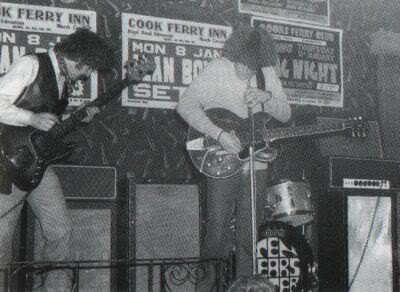
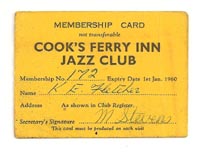
The jazz club at Cook’s Ferry Inn was started by Harry
Randall who is the brother of jazzman Freddy Randall. The
music was played in a large hall attached to the pub. b.
Ten Years After
played there on August 12, 1968< – It was not just jazz
that was played at Cook’s Ferry, many other famous rock
names have appeared there too. Bands such as The Graham Bond
Organisation – The Who – The Animals – Alexis Korner –
Spencer Davis and many more played there.
Graham Bond was
there almost every week and he played Jazz and Rhythm and
Blues on a Hammond B-3 organ, his bass player was Jack Bruce
and his drummer was Ginger Baker, both of whom went on to
form “The Cream” with Eric Clapton. n.
Back in those days I
used to smoke. The only place on a bus to smoke was on top
and a couple of times I rode sitting next to Ginger Baker
and we talked about music, but don’t ask me why he travelled
by bus, I don’t know.
Back to Cook’s Ferry
Inn, it was normally quite “roomy” except when The Animals
played there and we were stacked like sardines. As I
mentioned before, Ginger Baker and Jack Bruce used to play
with Graham Bond and I saw them many times at this venue. I
used to get there fairly early and many a time I saw all
three lugging a Hammond organ from the back of their van.
During one of the Graham Bond sessions, Eric Clapton jammed
with them, so that would be where the first “Cream” number
was ever played.
Story by George
Welsh
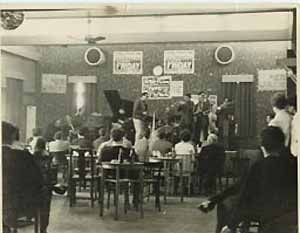
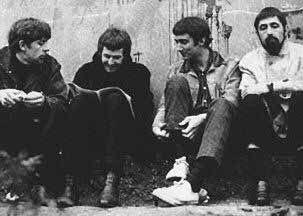
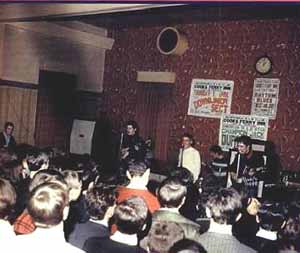
 Cooks Ferry Inn –
Angel Road – Upper Edmonton N18 Cooks Ferry Inn –
Angel Road – Upper Edmonton N18
In the 1960’s and
1970’s this venue hosted many world famous rock music acts
before they were famous. The venue was demolished to make
way for the enlarged North Circular Road, and now this
hugely important building, is just going to disappear from
the public knowledge and be totally forgotten as if it never
existed at all.
The Yardbirds – John Mayall’s Bluesbreakers - Nic Pickett
and also The Savoy Brown Blues Band, this group can rightly
take credit for cutting the farewell anthem of the 1960’s
British Blues Boom.
This in the form of a modern blues aptly
titled “Train To Nowhere”. Historically, as well as
musically, this song remains a sad reminder that by the time
of its 1969 release as a single, most original blues were no
longer commercially viable in Britain, as more and more
blues clubs closed their doors forever. Within four years of
Savoy Brown’s formation, however, they had become a major
league live act in America, while on their home turf in
Britain, the band couldn’t get arrested or break out of the
club scene. Savoy Brown backed, Champion Jack Dupree and
John Lee Hooker. Record Mirror Magazine praised Savoy Brown
as playing “a style of Chicago Blues which is both
commercial and authentic, and observed that Youlden was
often rated in the same breath as Long John Baldry and Rod
Stewart”. |
|
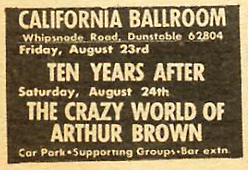
California Ballroom - Friday, August 23rd
(Melody Maker, 24 August 1968)
August 24, 1968 - MELODY
MAKER
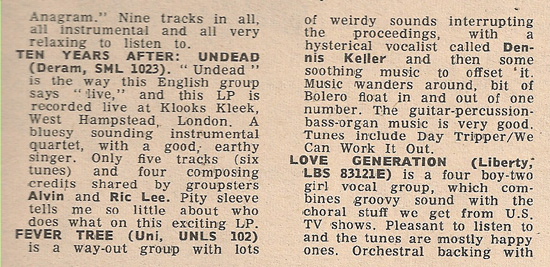
Ten
Years After – Learning and Jamming the U.S.
By Tony Wilson
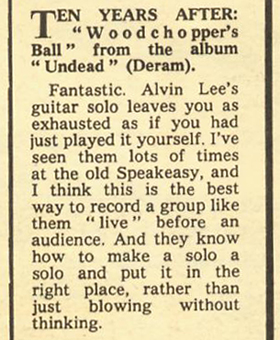
“The best thing
about the trip was that from all points of view, we learnt
so much,” said a sun tanned Leo Lyons, bass guitarist with
Ten Years After. The group has just returned from a highly
successful American tour and Leo, later joined by Alvin
Lee, guitarist and singer, dropped into the Melody Maker to
chat about their visit. “I don’t know whether it was the
audiences or the change of environment,” he continued. “The
audiences are very very musically aware, particularly in
San Francisco. They are really into what we are doing.
“But jamming is the
big thing over there. Sometimes we’d do only one number in
a set. From a bass-playing
point of view, I’ve got a new concept in playing. I got in
a rut and began to anticipate what I was going to do. It
came out sounding corny then one day I woke up and got a
lot of new ideas. Possibly, this has come from jamming. But
I think we all feel as if we have improved a tremendous
amount.” The jamming scene, where musicians just get up
and sit in with who ever is playing seems to have made a
big impression on both Leo and Alvin. “What we’d like to
do, is to incorporate jamming into what we do over here.
(England). It’s really a big
thing in America.”
Smashed:
Among the people
Leo and Alvin found themselves playing with, were Jimi
Hendrix and Larry Coryell, Janis Joplin of Big Brother and
the Holding Company and Graham Bond.
“We jammed with
Graham at the Scene club in New York,” said Alvin.
“Everyone was smashed at the party after the show, Janis
Joplin put four bottles of “Southern Comfort” on the stage
and everyone just played. Janice is like a female Mick
Jagger. People throw bottles of “Southern Comfort” at her,
like they throw jelly-babies at other people.” Alvin said
that now he feels musical freer and that his opinion of the
music scene in Britain had changed, and that now he had
lost the feeling of playing against people, but was now
playing with them. The jamming scene certainly seems to
have opened up new paths for Ten Years After, and Alvin
commented, “The thing with jamming is that you’re not
expected to be brilliant. It’s just experimenting.”
Touring:
Alvin recalled the
night that Larry Coryell and Jimi Hendrix sat in with the
group, “It was just one number, in the end they had to turn
the power off to stop us,” he said. “In the small clubs
over there it’s all jam things. You learn a hell of a lot
more, and we want to do that over here.” At the end of
September, Ten Years After return to the States for another
couple of months touring. Said Leo with a touch of dry
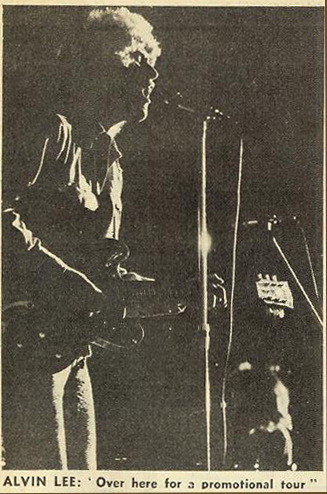
humour, “We’re only over here for a promotional
tour.”
|
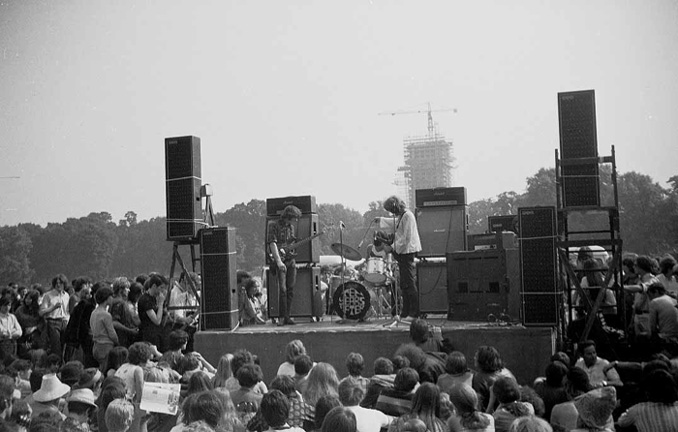
Free Concert at Hyde Park, London - August 24, 1968
(Photos by Alan Grange)

Alvin Lee dangling the
microphone for Ric Lee's drum solo as Leo Lyons looks on

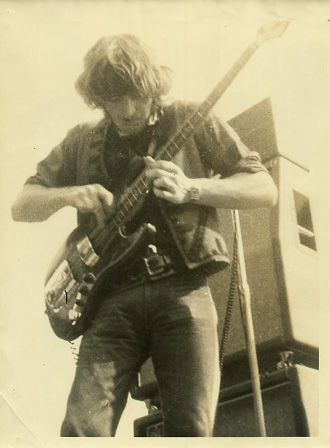
We really like these original photos from this concert, when they
arrived there was no hint of a date or place where they were taken
from, we matched the clothes and that gave us a time frame and which
concert. We continue to put the pieces together.
|
Ten Years After Play Hyde Park – Free
Concerts - Dear Diary – Fans Remember – August 24,
1968
“A very beautiful
afternoon, started by Ten Years After, with some really
mind-bending instrumental work, original lead guitar
playing by Alvin Lee. In one number he ran through excerpts
from half a dozen blues classics, with a different voice
for every one”. Pete Collins
“I saw Ten Years
After, the audience was relaxed, music great and the
afternoon was generally imbued with 1967’s love and peace,
really fantastic and enjoyable. I’m so glad things like
this can happen”. Chris Marshall
“My recollection,
is that Ten Years After came on and did a John Mayall
number (?) Which lasted for their whole set, with the
obligatory solos”. Allan Warfield
“I remember attending this concert, clutching my brand new
copy of “Undead” by Ten Years After, which had just been
released. As it was one of the earlier concerts that was
held in the cockpit, the view was pretty good from wherever
you were seated and it was a sunny day as well, what more
could you ask. Ten Years After played first as they had to
get away early to reach another gig on time. I don’t
remember what they played, only that it was good”. |
|
Melody Maker, 24 August 1968
New Musical Express August 31, 1968
|
|
September 3rd through the 12th
1968 – Ten Years After are at the West Hempstead Studios
in
London, England. The band is laying down tracks for
their upcoming album entitled “Stonedhenge”
September 13, 1968 – “Bluesville 68” – Manor House –
London, England
September 14, 1968 - Tofts Folkestone, England
September 15, 1968 – Black Prince Hotel – Bexley,
England
September 18, 1968 – Toby Jug – Tolworth, England
September 19, 1968 – Le Metro Birmingham, England
September 21, 1968 – The Alex Discotheque Salisbury,
England
September 22, 1968 – The Boat Club – Nottingham, England
|
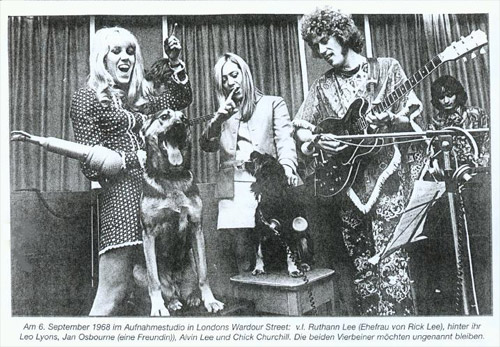
6th September 1968 - in the recording studio on Wardour Street,
London

|
Ric Lee’s dog “Nicky” has been getting her share of publicity
attention lately, due to her singing. If the band are able to
record her in action, she just may end up on their next record
album. She’s in the recording studio right now laying down some
tracks. This event would make Nicky the very first canine blues
singer in recording history. |
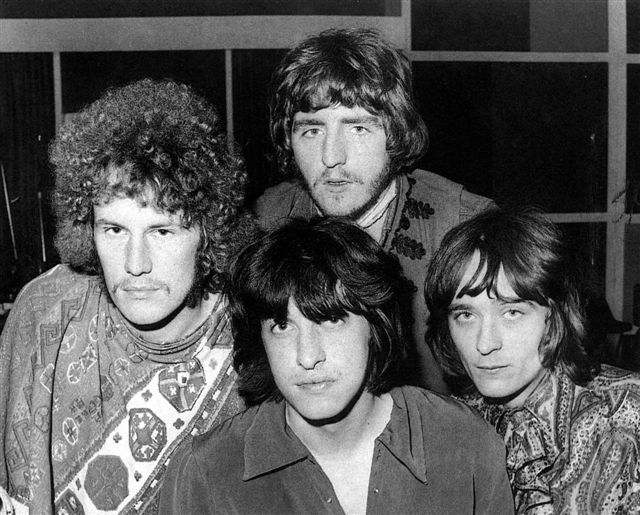
Many Thanks to Claudia Staehr (Herb Staehr'
sister) for this
beautiful photo


popfoto Magazine (Holland)
with signatures of TYA
|
LEO
LYONS INTERVIEW:

From
The
Record Mirror - From the week ending September 14, 1968

(Upon
Ten Years After’s return from their very first American
tour)
Many
people will now be familiar with the combination of Leo Lyons,
Alvin Lee, Ric Lee (No Relation) and Chick Churchill, the four
members of Ten Years After who have recently returned from a
highly successful American tour. Fewer people, however, are
fully aware of their activities. I spoke to Leo Lyons, bass
player with the group:
“Since
we’ve returned home it’s been tremendous”, he enthused.
“Every gig has been a full house. We now find people in
England will accept the lengthy numbers we like to play. We
start our act by doing a set number, you know, and take it
right from there as the audience responds. The better the
audience, the better we play.”
Leo
also seemed very impressed with the reception the group
received from American audiences, and he continued: “Ten
Years After really have a small minority appeal, but the small
minority in America is vast! Even the large places we played
there had a very good atmosphere because the audience were
like a very large club audience.
“Commerciality
doesn’t necessarily matter. One of the barriers here is that
a lot of young people like Dave Dee, for example, and just
will not accept any other music. In America you get people who
like blues, who like jazz, who like progressive rock. You even
get a blues group playing soul – as long as it’s good
music the audience like it.”
The
group really enjoyed a massive jam session at the Scene Club
in New York, when such artists as Larry Coryell, Janis Joplin
and Graham Bond joined them on stage. In fact this so
impressed them, that on their return to Hampstead’s Klooks
Kleek club, Ten Years After invited many other musicians to
join them during their second set. Among those who obliged
were Roger Chapman of Family, Paul Williams, Alan Price and
John Mayall.
In
America, Leo informed me, Ten Years After are considered to be
“a progressive rock” group. I was interested to find out
how he felt about being categorised here as an
“underground” group, and if he thought this trend might
die as flower-power did. He replied:
“I
suppose that is the label of our stuff over here. I don’t
think it’s the same type of label as flower-power though,
and I don’t think it will die. I wouldn’t like to be in a
pop group where the main thing was not the music. I’m quite
happy to have just that.” To accentuate this point Leo
continued: “We don’t get the girls screaming and I
wouldn’t like to. When the Beatles used to do a concert it
wouldn’t really have mattered if their amplifiers were
switched off!
I
like people to hear what we’re playing – I wouldn’t like
to be a pop star in that respect.”
Before
Ten Years After return to America in September they will be
disappearing into the recording studios to cut some tracks for
a new LP and follow-up single to “Portable People”.
(Note:
The album mentioned here will be “Stonedhenge”).
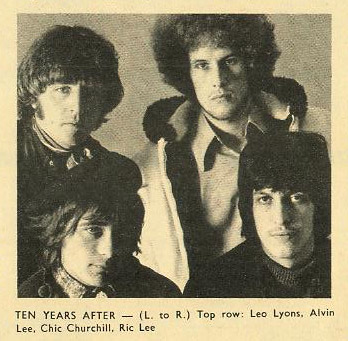
All
the numbers will be originals penned by group member Alvin
Lee. They hope to record at least twelve tracks, one of which
will then be selected for the new single.
I
asked Leo how he regarded the singles market, considering that
the group are far more noted for their LP’s “Undead” and
“Ten Years After” than their single: “Singles give you a
lot of scope to get across to more people, but it’s just
something that sells commercially. We won’t actually try to
make a single, we don’t really know what is a commercial
single. It is looking up here, but generally they want two and
a half minute recordings, which wouldn’t be sufficient for
us. For this reason we like to make LP’s.
The
fact that Ten Years After like to play very lengthy numbers,
sometimes lasting at least thirty minutes, also affects their
attitude to television appearances. “We couldn’t represent
what we want to do in one short appearance,” said Leo. “If
they let us go on and do what we want to do it would be
fine. It would be nice to do, say, a half-hour show like they
have on BBC2.” The group have, however, made television
appearances in Sweden, Denmark and France, and feel that in
the longer time allotted to them they can achieve what they
are aiming for.
Said
Leo: “After guitar, I took up bass and learnt more by
listening to records and reading various books. I listened to
a lot of jazz as I think it’s the most technical and gives
the most scope.
I
particularly like Scott LaFaro, Richard Davis and Charles
Mingus.” Leo
Lyons and Alvin Lee also gained their knowledge on guitar by
playing at sessions for various bands for about nine years
prior to the formation of Ten Years After. (For those who are
now in the process of quick mental calculation , the group’s
ages range from 22-24 years!)
“I
imagine record production would be interesting, though playing
is the main thing. I wouldn’t really like to make films, it
would be just a giggle. All we want to do is play.”
Leo
does have another hobby though, which he took full advantage
of while in America. “I like horse riding,” he told me.
“Any chance I got, I used to rent a horse for the day. Get
away from civilisation and be very, very relaxed. Sometimes
I’d like to have been born 150 years ago. I sometimes fancy
being a hermit.”
There
is little chance of this happening for a while, for Ten Years
After have an even more extensive tour on their hands when
they return to America. They are also to make their fourth
visit to Scandinavia in January (Note: This would’ve taken
place in 1969).
As
Leo says: “Things are pretty rosy for us now, but maybe a
couple of years ago I could have made money doing something
else. I would have been satisfied to work in a pit orchestra,”
he continued, “even though no one sees you. I just
wouldn’t like to play anything that didn’t make me feel
emotional. We play how we feel emotionally and physically.”
Interview
with Leo Lyons written by,
Valerie
Mabbs for,
Record
Mirror Newspaper
|
|
Bass
Notes
By Leo Lyons 1968
I’ve
been asked to recommend some records which I have been
influenced by and that form the basis of my roots as a
musician.
Ten
Years After have been described by one person as a Blues
Based, Jazz Orientated, West Coast-ish Rock Group,
playing Free Form Symphony Music, and I only heard half
of the sentence.
It’s
true I do have a wide taste in music, necessarily,
inside and outside of what we play, and music doesn’t
have to be clever to provide me with enjoyment. However,
Jazz Bass Playing provides a great scope for
inventiveness and it’s from listening to Jazz that I
have formulated most of my playing ideas.
I
listened to records by bassists like Ray Brown, Charles
Mingus, Percy Heath, Red Mitchell and the father of them
all Jimmy Blanton. As these are comparatively well known
artists I will pass them over with just a mention.
A
bassist most people will not have heard of and one of my
greatest influences is Rocco Scott La Faro. “Scotty”
lived a very short life, he was killed in a motor car
accident back in 1963 at the young age of 25. He made
ten record albums as far as I know, nine of which are in
my personal collection.
His
style was something completely different, although he
did admit in his early years to having been influenced
by Charles Mingus. Jazz critics liken his playing to
that of Django Rheinhardt which is an incredible feat on
Double Bass.
His
speed and intonation are nothing short of a miracle, and
in his solos his phrasing is akin to that of a good
tenor player. He never however lets his technique run
wild, and I consider him to be one of the most tasteful
players I’ve ever heard. I could write for hours about
“Scotty’s” playing, but I feel it would be better
to listen for yourself, and form your own opinions.
“Scotty”
was a strongly featured solo man, and can be heard
playing at his best with The Bill Evans Trio, with whom
he did most of his recorded work.
Albums
with Bill Evans include:
Portrait
of Jazz (on
Riverside Records)
Waltz
For Debby (on Riverside Records)
Bill
Evens at the Village Vanguard (which was Scotty’s last
recording)
Other
albums featuring Scotty are as follows:
The
Arrival of Victor Fieldman (which is a must have for
every collector)
Hampton
Hawes For Real
Jazz
Abstractions
Free
Jazz, by the Ornette Coleman Double Quartet
Ornette
A
few of the other bass players that I recommend listening
to are:
Eddie
Gomez, Charlie Hayden, and the man who is said to have
taken over where Scotty left off is Richard Davies. He
can be heard on the record album called “Thad
Jones-Mel Lewis Solid State".
|
|
The Boat Club, Nottingham
Originally it
became a live music venue in 1962. It has a capacity of 250
people.
Downstairs, you’ll
find room to chill-out with the Heavenly Jukebox.
Name Dropping:
Sits quietly by the
banks of the River Trent and is overwhelmed by the dwarfing
city ground in its shadow, The Boat Club remains virtually
unknown to many. Ten Years After played there on September
22, 1968 and others who have played there are Rod Stewart,
Elton John and The Sex Pistols to name but a few. Continue
by naming Led Zeppelin and Black Sabbath have both graced
these hallowed walls and we have just upped the anti by
half more.
This place sounds
like it should be home to the green polo and golf sweater
set, as a country pub for the quiet set of respectable
elders. Showing fox hunting photos is not what this venue
is about at all. The Boat Club in name is an oxy- moron –
oddity in itself. It’s really an illustrious array of rock
and roll luminaries running free.
The Boat Club
Layout:
The Boat Club is
divided into two main parts. The function room with the
main stage being at the front, and a large lounge area with
its seating around the walls. Its design evokes memories of
school discos, with the main dance floor in one area and
then the surrounds where the dateless and the broken
hearted go to sink into their own personal misery. But it’s
really not as depressing as all that – it just sounds like
Heartbreak Hotel is all.
The Rooms:
The two rooms work
in harmony and the main bar runs adjacent to both. One
offers calm conversation and sit-down drunks and the other
the other offers more atmosphere and life. The lounge area
is decorated with displays of The Boat Club’s achievements
along with framed photographs of previous and current
personal provide a sense of belonging and homeliness to the
venue. Tables, Stools and in – wall seats are dotted around
the spacious interior, helping the lounge to stand alone as
a pub unto itself.
The Stage:
The centre-piece of
this venue and the main reason it has been such a success,
is its own performance hall. Wooden floor, boarding
underneath and an elevated main stage at the front provides
the key features to a cosy but not under sized room. The
acoustics here, although obviously under the direction of
volume control, dissipate through the entire venue, so that
the band playing on the main stage are a pleasant
background noise to the beer drinkers in the bar, at the
back. But the main focus of attention to those main
function room.
The Nottingham Boat
Club has everything, from glamour to glitz and atmosphere
that has made it famous for the last 40 years.
|
|
Ten Years After at the “Wood Green Jazz
Club London”
September 24, 1968 – Members of the Promoters Association.
The British Jazz Society and Associate Members of Haringey
Borough Council Arts and Civic – The Nice Club – For Nice
People. The Fishmongers Arms and Bourne Hall. September 24,
1968. Ten Years After played there in the early part of
1968, as with the Marquee Club, Jazz was fading out and
Rhythm and Blues were coming in. The Graham Bond
Organisation with Jack Bruce, Eric Clapton and Ginger
Backer – Jethro Tull – Fairport Convention all played there
among others
The Wood Green
Jazz Club was a fantastic place and memories I will always
treasure.
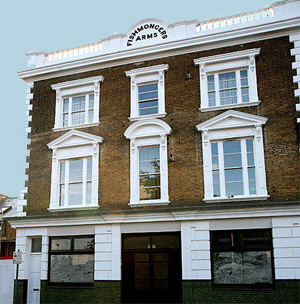
It was located with
Fishmongers Arms and Bourne Hall at 287 High Road, Wood
Green, London N228HU. Today Bourne Hall is a block of
flats.
It was different
in those days, the London club scene was more intimate. I
realize now, just how fortunate we were at the time, that’s
just the way it was. Jazz was fading out, and the bands
weren’t pulling in the crowds that they once did.
Tuesdays
attendances were embarrassing low, sometimes in the single
figures when they started playing. If you were at the front
for the opening numbers, it felt like they were performing
just for you. Of course this could not last and jazz was
phased out in favour of the Rhythm and Blues bands like
“The Mike Cotton Sound”. I can also recall seeing “The
Graham Bond Organisation” with Jack Bruce and Ginger Baker,
(later forming “Cream” with Eric Clapton) but this was
really not my thing, too loud, and I prefer my blues
acoustic and I drifted away from the club. I don’t know
when the Jazz-Club ceased to function, but by 1968 the
Fishmongers Arms and the Bourne Hall was the venue that
presented the likes of Jethro Tull and Fairport Convention
with Richard Thomson and Sandy Denny, this is one that I
would have liked to have seen perform live, but I moved
away from London by then.
Other bands who
played there were: Pink Floyd November 8, 1968 – Led
Zeppelin - December 20, 1968 – Juicy Lucy – Trader Horne 17th
– Freddy King – Peter Green’s Fleetwood Mac Blues Band.
The
band “Stranger Than Yesterday” supported The Pink Floyd at
The Fish Monger’s in Wood Green. They also supported “The
Pretty Things” at Rush Green Technical College.
Thanks to Ian Maund
- enjoy his great website:
www.sandybrownjazz.co.uk/ |
|
September 27th and 28th 1968 – At
The Fillmore East, In New York City, New York
September 30th through October 3rd,
1968 – At Steve Paul’s Scene Club New York City
October 4th through the 6th 1968 –
At The Grande Ballroom Detroit, Michigan – Also on the
same concert bill are: The Rationals and Orange Fuzz.
November 7, 1968 – At Freeborn Hall – The University
Davis, California – Ten Years After open the show for
“Harpers Bizarre” (If you can believe that!!!) (Feeling
Groovy – was Harper’s big hit of the day).
November 8th and 9th 1968 – “The
Bank” – Torrance California
November 14th through the 17th
1968 – At The Fillmore West – San Francisco, California.
Also on the same concert bill are: Country Weather and
Sun Ra.
November 22nd and 23rd 1968 – At
The “Mill” in Sacramento, California
November 29th and 30th 1968 – At
“The Shrine Auditorium” Los Angels, California – On the
same concert bill are: The Jeff Beck, The Moody Blues
and Mint Tattoo.
December 12, 1968 – At The Fillmore East in New York
City, New York
|
|
1968 - Ten Years After
Tour – Leo Lyons Speaks Out
September 27 and 28, 1968
“We arrived in New
York City four hours before we were due on stage and with
everyone feeling like death, we were worried about our
opening at the Fillmore East. When we arrived at the
theatre, we were somewhat encouraged by the terrific crowd
of people waiting to get in, there was a capacity crowd of
2,500 !!!
Procol Harem were
on first and we had the next spot, second billing to
Country Joe and the Fish. Even though we didn’t feel on top
form, the audience was amazing, after we finished they went
mad, and I’m told, were shouting for more, for 22 minutes.
It was really a tremendous scene. Anyway, Country Joe went
on a half hour later than expected, so the show over-ran,
and by the time the second house (performance) started,
people had been queuing (waiting in line)
outside for two hours. The whole thing at the Fillmore East
is just too incredible for words, and the audiences are
ridiculous” (great).
Monday, we did a
free concert in Central Park with Country Joe, Buddy Guy
and Jefferson Airplane. About 20,000 people went along
(came out) and it was filmed for the news that night.
Monday night we opened at (Steve Paul’s) “The Scene Club”
for four days. This has been great, as we’ve been doing our
own thing (music-set) for the first spot and then jamming
for the last one with a variety of guys. During the day
we’ve been going round the radio stations doing interviews
and the airplay that we’ve been getting is tremendous.
All in all,
everything so far is really incredible, and we’re all
knocked out, and I think none of us can really believe it’s
all really happening”.
Note: Ten Years
After played at Steve Paul’s Scene Club on August 4 – 6.
They also played there on September 30th –
October 3, 1968. A bootleg cassette tape exist of the
August 4th concert. Songs Include: Crossroad
Blues – I May Be Wrong, But I Won’t Be Wrong Always,
Spider In My Web – Shantung Cabbage – Help Me Baby. |

October 1968, BEAT
INSTRUMENTAL, No. 66 - cover and page 27


October 4 - 6, 1968 -
Grande Ballroom, Detroit
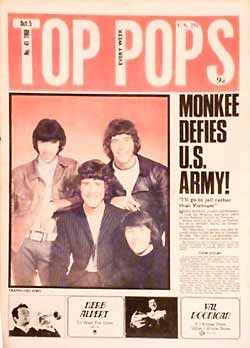
Top Of The Pops - 5 October 1968
Ten Years After... "Undead" and Well, and touring
the States

October 10, 1968 - Boston
Tea Party, handbill
|
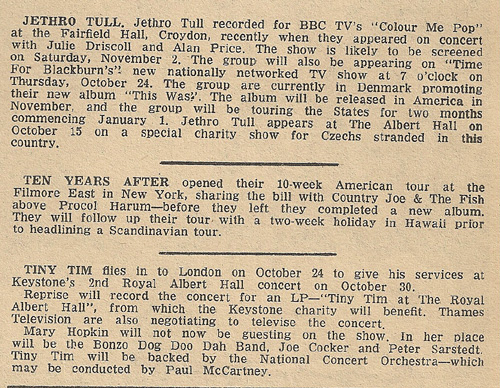
Record Mirror -
12 October, 1968
|
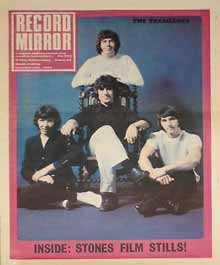
12 October
1968 |
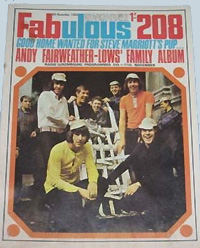
12 October, 1968
Album Review of "UNDEAD" inside the magazine |
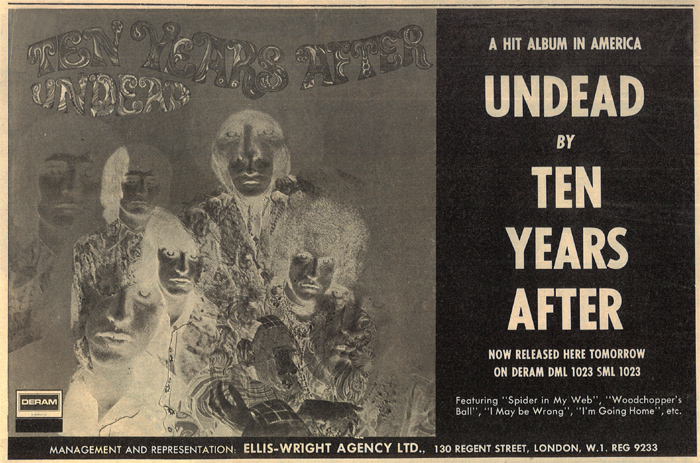
Ten
Years After’s Second Album
- Recorded Live but called "UNDEAD" Comes To Life!
“After
the first album came out, we got the letter from Bill Graham
saying he would be glad to book us if we would like to come
over. So, we put together the American tour and we didn’t
have time to do a studio album, so we did the live album.”
Leo Lyons
|
|
Rolling Stone
Magazine -
October 12, 1968
Ten
Years After “UNDEAD”
“…A
very fine jam band, recorded live doing its thing…Ten Years
After just gets in there and
swings…”
Another
Review:
“Undead”
by Ten Years After, was recorded “Live” in a small club in
1968, this set was Ten Years After’s commercial
break-through album. There’s no estimating how many aspiring
guitar heroes heard it and immediately wanted to kill
themselves.
 Leader
Alvin Lee’s fleet-fingered-fret work, although no big deal
by jazz standards, sounded pretty revolutionary in a rock
context, and started a school of guitar playing in which speed
matters above all other musical considerations which continues
to this day. Leader
Alvin Lee’s fleet-fingered-fret work, although no big deal
by jazz standards, sounded pretty revolutionary in a rock
context, and started a school of guitar playing in which speed
matters above all other musical considerations which continues
to this day.
Undead
is a good unpretentious set of mostly up-tempo blues-jams (the
most famous being Ten Years After’s signature “Goin’
Home,” immortalized in the Woodstock movie).
However,
there’s no mistaking the period in which it was made…a big
clue being a cover of Gershwin’s ultra-melodic
“Summertime” that’s primarily a vehicle for a drum solo.
|
|
From
Bill Board Magazine October 12, 1968
New
York – Linn County, a heavy blues group, gave a
powerful second set at Steve Paul’s Scene Wednesday
(2). Sharing the bill with the Mercury quintet from
Chicago via San Francisco was Deram’s Ten Years After,
whose growing reputation and glowing
performances doubtless was a primary reason for the
packed house.
But Linn County’s long set showed that
they too, are big league material.
The unit uses volume as an element in it’s
performance, but there is much more to Linn Country than
just volume. Organist Stephen Miller not only is a good
musician, he wails in emotional blues style. Larry
Easter’s performance on amplified tenor and soprano
saxophone (he also played flute in the group’s first
set) was overpowering, More on the jazz side, Easter
also showed traces of progressive jazz and even
classical elements. Lead
guitarist Fred Walk, also gave a strong performance,
frequently teaming with Easter. Solid
support also was provided by drummer Snake Mc Andrew and
bass guitarist Dino Long. Most of the numbers were
extended, including “Elevator Woman,” which included
fine work by Walk as well as by Miller and Easter,
“Boogie Chillen,” more up-tempo, also was a good
extended selection as it included some wild soprano sax
work by Easter and varying dynamics. “Tell The Truth”
was another upbeat number with wild sax and Miller’s
strong vocals. “Think” and “Lower Lemons” were
top numbers from Linn County’s debut album on Mercury:
“Proud Flesh Soothseer”.
While
Linn Country, in its first set, filled the floor with
dancers, Ten Years After filled it with seated listeners.
And the English quartet gave another excellent
performance with all four youths having brilliant
sections. Folk singer Hal Waters also had a good initial
set.
By Fred Kirby
|
|
Cash Box – October 12, 1968
Ten Years After
was formed in England earlier this year, just in time to
be caught up in the resurgence of the blues sweeping that
country and become one of the prime movers in exporting
and making the sound popular here.
The quartet’s
members are lead guitarist Alvin Lee, bass guitarist Leo
Lyons, drummer Ric Lee (no relation) organist Chick (with
no last name).
The group met in a
North Wales Bus Shelter, and shortly afterwards found
themselves playing the first of many dates at London’s
Marquee Club. After gaining attention in England, the group
(which records for Deram) was set for an American tour and
proceed to enhance both critics and audiences across the
country. They were quickly booked for another tour, which
kicked off last week, with two days at New York’s Fillmore
East, and five at Steve Paul’s Scene. Their second LP
“Undead” (a live performance) is currently number 136 on
the album charts.
|

October 15 - 16 - 17, 1968
- La Cave, Cleveland. Ohio

18 & 19 October, 1968 -
The Kinetic Playground, Chicago
|
19 October 1968
- MELODY MAKER
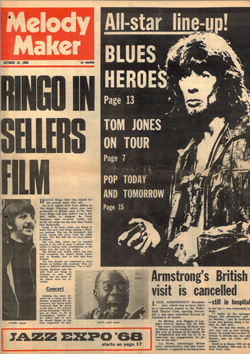
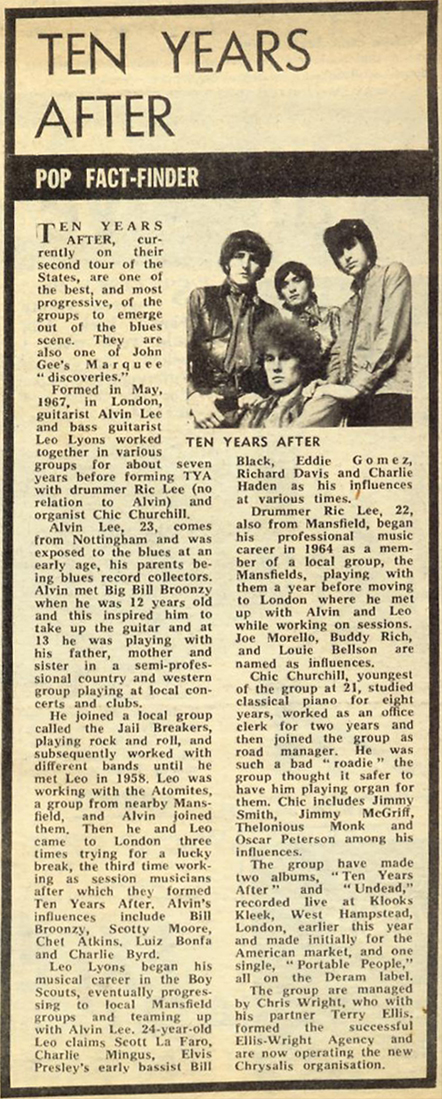
Melody Maker-
October 19, 1968
Ten Years After object to being labelled a blues group, but
with Alvin Lee’s
brilliant guitar a major feature, they will have trouble
persuading me that everything they do isn’t firmly rooted
in blues. Currently on a highly successful
American tour, the line-up is completed by, Chick
Churchill, Leo Lyons, Alvin Lee and Ric Lee. The group was
formed early in 1967.
|

25 & 26 October, 1968 -
Electric Factory, Philadelphia

November, 8 & 9, 1968 -
Concert Poster, Bank Torrance, California
|
14 - 17 November 1968,
Fillmore West, San Francisco
Artist: Lee Conklin
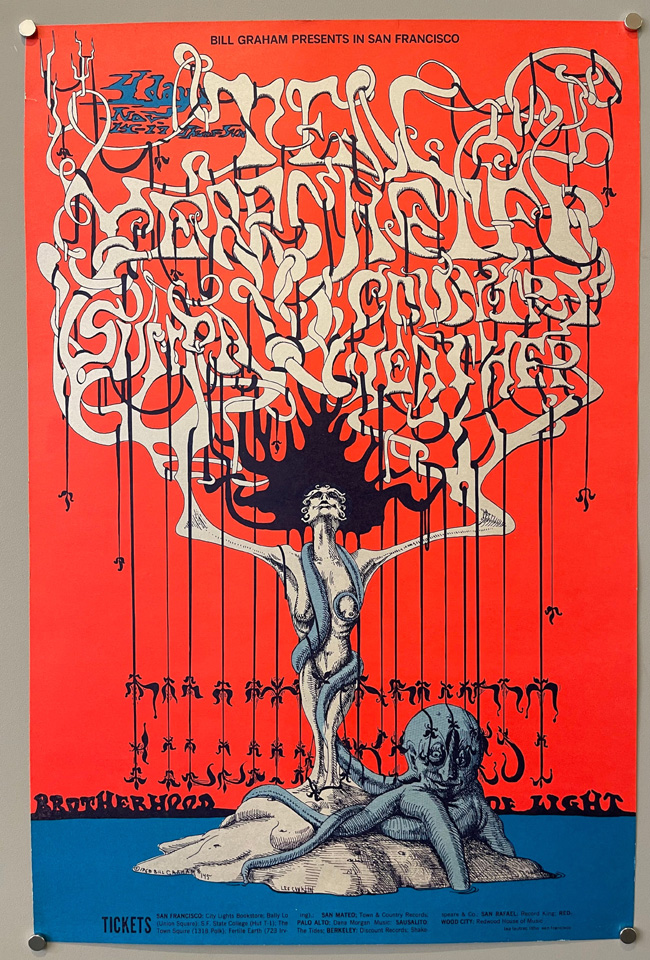
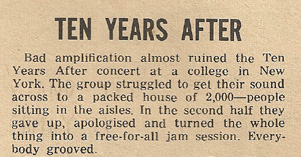
Record Mirror November 16, 1968
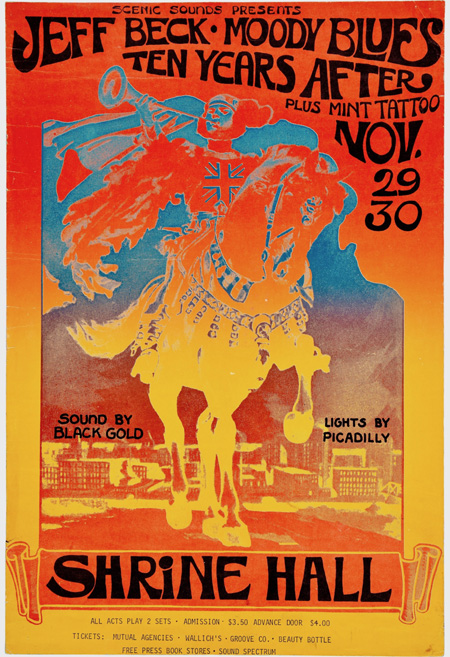
1968, November 29, 30 - Shrine Hall.
Los Angeles

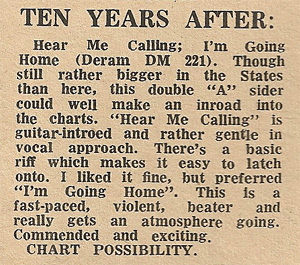
Record Mirror November 30, 1968

December 13, 1968 -
Bluesville '68 Clubs - The Hornsey Wood Tavern

|
Melody Maker – December 21, 1968

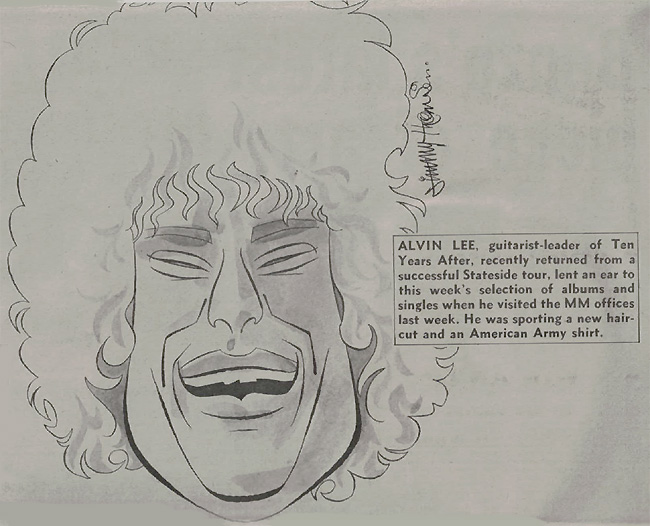
Alvin Lee, Guitarist-Leader of
Ten Years After, Recently Returned From A Successful
Stateside Tour, Lent An Ear To This Week’s Selection of
Albums and Singles When He Visited The Melody Maker
Offices Last Week. He Was Sporting A New Hair Cut and An
American Army Shirt.
SHARKS: "Goodbye Lorene" – RCA
VICTOR.
"Can’t Really Guess Who It Is. Wynder K. Frog Or
Jimmy Smith On An Off Day. It’s O.K. But It Doesn’t Do
Anything To Me. I’ve Given Up Trying To Work Out What
Are Good Singles. The Drums Are Too Far Forward And I
Don’t Like That Double Tempo Middle Bit. If I Had
Recorded It Myself, I Would Have Said O.K.".
Lord Nelson: "Michael" –
(Direction).
« A Joke ! Take
It Off – As They Say. At First I Thought It Was A Joke,
But When The Drums Came In I Thought I Was Going To Like
It. When It All Came Together I Didn’t Like It Again.
They Were Probably Having A Good Time. I’ve Got Nothing
Against My Soul Brothers".
Barbara Streisand: "Funny
Girl" – (CBS).
"I’ve Always Wanted To Sing Like That,
But I’m The Wrong Sex. Barbara Streisand. All Right If
That’s Your Bag. It’s Not A Mood. It’s The Kind of Thing
You Play Very Loud In Another Room Or You Play It Loud
And Then Go Into Your Garden At Night. Seems To Be The
Kind of Thing To Do. A Must For People With Big
Gardens".
The Poets: "Alone Am I" – (PYE).
"Denny Laine, Or The Moody Blues, Or Roy Orbison, Or
Jethro Tull? I Never Say Anything Is Rubbish, But This
Gets Near It".
Groundhogs: "You Don’t Love
Me" – (Liberty).
"Rubbish – I’ve Just Changed My Mind
About Using That Word. Doesn’t Quite Make It. It Sounds
Out of Tune. The Harp Is Not Playing Right. This Doesn’t
Sound Right. Who Is It And I’ll Apologise. I’d Say,
"Keep Trying." I Prefer Father John Mayall".
Jimmy Forest: "What’s New" –
(From The Delmark LP – "All The Gin Is Gone"). With
Grant Green, Harold Mabern And Elvin Jones.
"Great
Musicianship. The Only Complaint Is That It Tends To
Sound Like Muzak A Bit At Times. I Think A Lot of It Has
A Lot To Do With Session Musicians and Groups Formed For
Sessions. I Might Be Wrong, But If I Were The Sax
Player, I’d Like The Drummer To Come Up More and Loosen
The Whole Thing Off. The Solos Are Cool, But It’s Not
Really Together".
Duster Bennett: "40 Minutes
From Town" (From The Blue Horizon Album, "Smiling Like
I’m Happy").
"Duster Bennett, The One Man Ensemble. He
Has Done Some Good Stuff, But I Don’t Like That One. A
Blue Horizon Blues Copy Record. I Wouldn’t Knock Him.
He’s Doing His Own Thing, But It’s A Novelty Thing.
He’ll Always Be An Added Attraction".
Arlo Guthrie: "Pause of Mr.
Clause" (From The Reprise Album "Arlo").
"Could Be Arlo
Guthrie. I Dig His "Motorcycle Song." Great. I Don’t
Know What To Say Because I Haven’t Heard All His Stuff.
I Prefer Him To Dylan. Arlo’s The Best In That Field.
He’s Saying Heavy Things, But Not In A Bad Way. I Like
To Think We’re Into The Same Thing As He Is Doing, Only
We’re Doing Musically What He Is Doing Verbally".
Beatles: "Back In The U.S.S.R.
(From The Apple Album) The Beatles "White Album."
"Might
As Well Take It Off. I’ve Heard This A Thousand Times.
There’s Bits I Like And Bits I Don’t Like, But Any
Beatles Album Is Going To Be Interesting. If Only People
Have The Maximum Time And Facilities, They Can Do What
They Want. I Dig "Revolution 9" On Earphones
(Headphones). You Should Listen To It Like That If
You’ve Got Stereo. Since Hearing The Album I’ve Tried
Doing It In The Road. Whether You Like It Or Not, Any
Beatles Album Is Good.
|
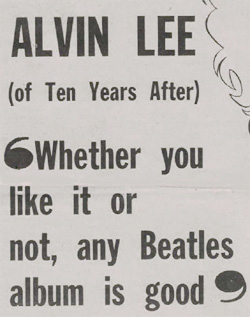 |
Doctor K’s Blues Band: "I
Can’t Lose" (From The Spark Album – "Doctor K’s Blues
Band").
"White English Blues Band. I Don’t Like The
Recording Sound. It’s Very Difficult To Judge Them. If I
Heard Them Live I’d Probably Think Differently. We’ve
Always Had Trouble Getting A Good Recording Sound, The
Same As On Stage, And They’ve Probably Had The Same
Trouble. I Like To Think That Recording And Stage Are
Two Different Mediums. Good Cover.
The Dubliners: "Instrumental
Medley" – (From The Major Minor Budget Album, "The
Dubliners").
"I Like It, Strangely Enough. The Banjo
Player Has Good Phrasing. Yeah, It’s Not The Type of
Music I’d Particularly Buy Or Listen To, But As It’s
Being Played To Me, I Can’t Knock It. For The Type of
Thing It Is, It’s Very Good. Heavy."
Joe Tex: "Keep See How" –
(From The Atlantic Album "You Better Get It").
"Take
This Off. It’s Not My Thing. It’s OK. Good Musicians
Doing What They’ve Been Told In The Background While
He’s Doing His Thing. Just Not My Bag, That’s All."
James Taylor: "Don’t Talk Now"
– (From The Apple Album "James Taylor").
"The Studio
Sounds Good. Tight Sound. There Again, Not My Bag But A
Very Together Production. Apple? That Accounts For The
Good Studio. I’m Waiting For Paul McCartney To Discover
Me. Or Twiggy!"
Iron Butterfly: "Flowers And
Beads" – (Album From Atlantic Album – "In- A-
Gadda-Da-Vida").
"I’m Disappointed. I Thought You Were
Going To Save Me A Good One For The End. I Don’t Like
That. I’ll Make A Social Comment Here. There’s A Lot of
American Bands Considered Underground Over Here, I Like
The Doors, Jefferson Airplane, Blue Cheer and Butterfly,
That Are Hypes In The States. Like The Beefheart Thing.
When We First Went To The States, Beefheart Was
Happening Here, Courtesy of You Know Who. When We Got
There We Asked About Beefheart And Nobody Had Heard of
Him. The Only Guy That We Met Who Had The "Safe As Milk"
Album Had Got His From An English Import Store. Tiny Tim
Is Another Trip. He Does London Palladium Equivalents
There."
|
|
December 22, 1968 – At “Mothers” in Erdington
Birmingham, England
December 26, 1968 – The Marquee Club in London, England
– Ten Years After returns to the place where they got
their big break and
secured their residency….at the
Marquee Club in 1967…..now they return for a show and a
special “Christmas Party”. To round off a hectic and
very productive year.
|

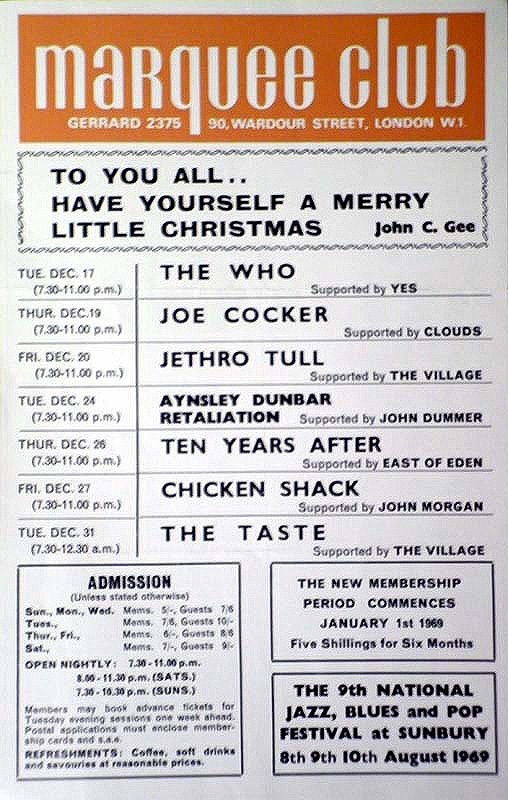
26 December 1968
BLUESVILLE
'68 CLUBS
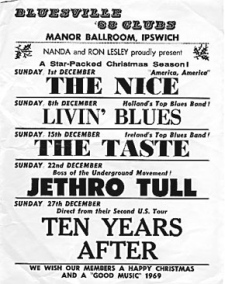
WE WISH OUR MEMBERS A HAPPY CHRISTMAS
AND A
"GOOD MUSIC" 1969
|

Undead - Cover
(Japan)
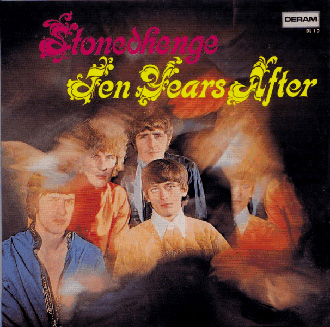
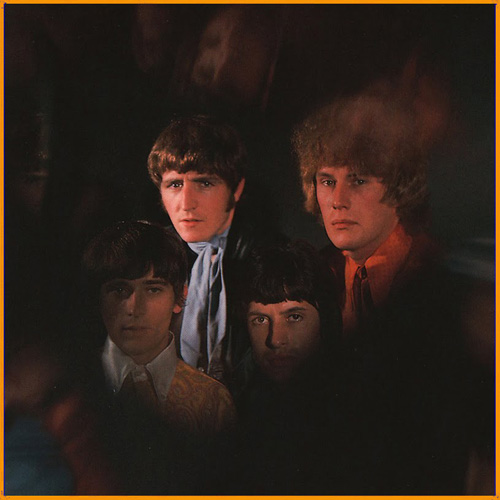
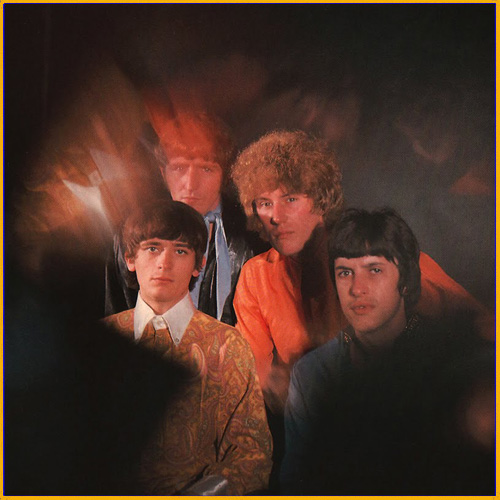
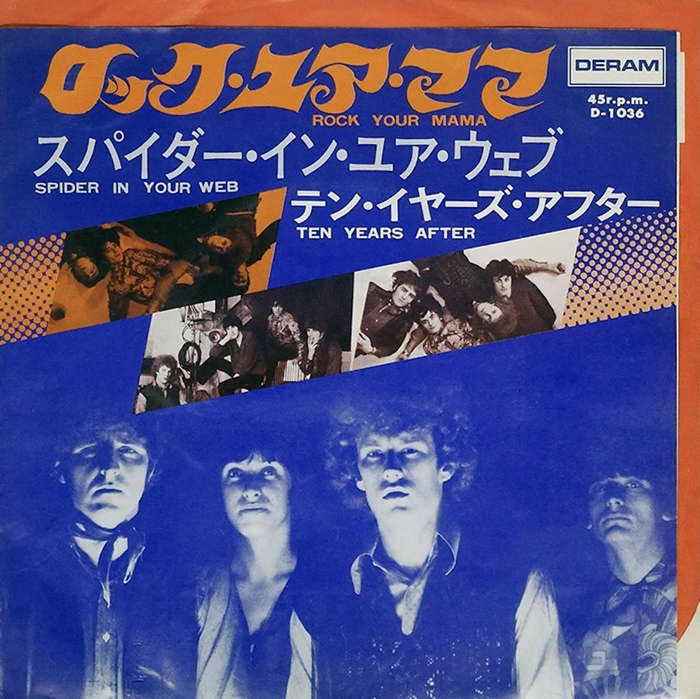
Single "Spider In Your Web" /
"Rock Your Mama" (Japan)

December 1968 - BEAT
INSTRUMENTAL, No. 68
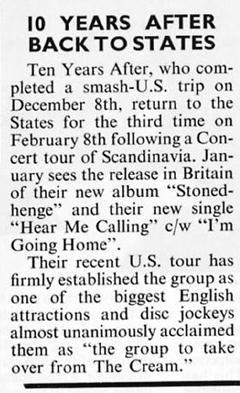
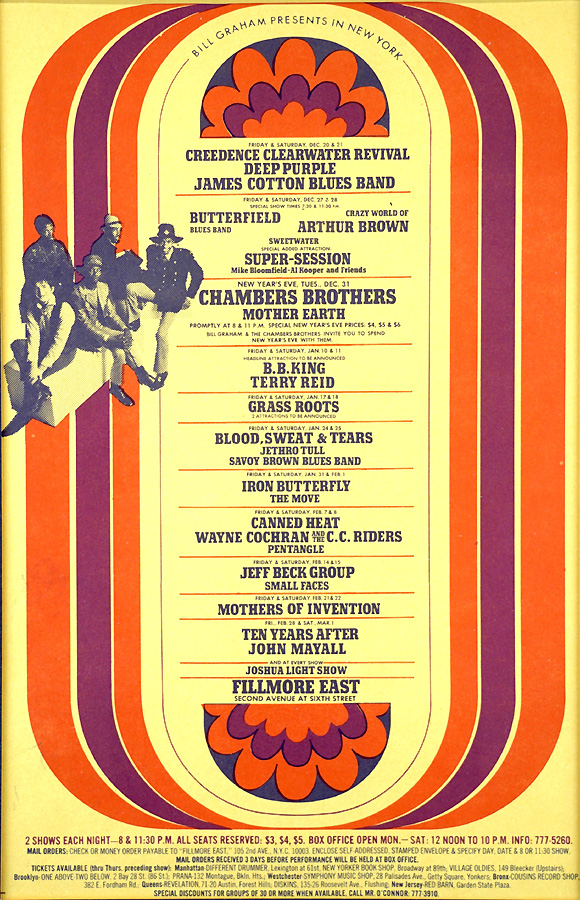
Fillmore East, New York City, December
1968 - March 1969
1968 - Muziek Express,
Netherlands - Pages 56 & 57
Photos published in March 1969
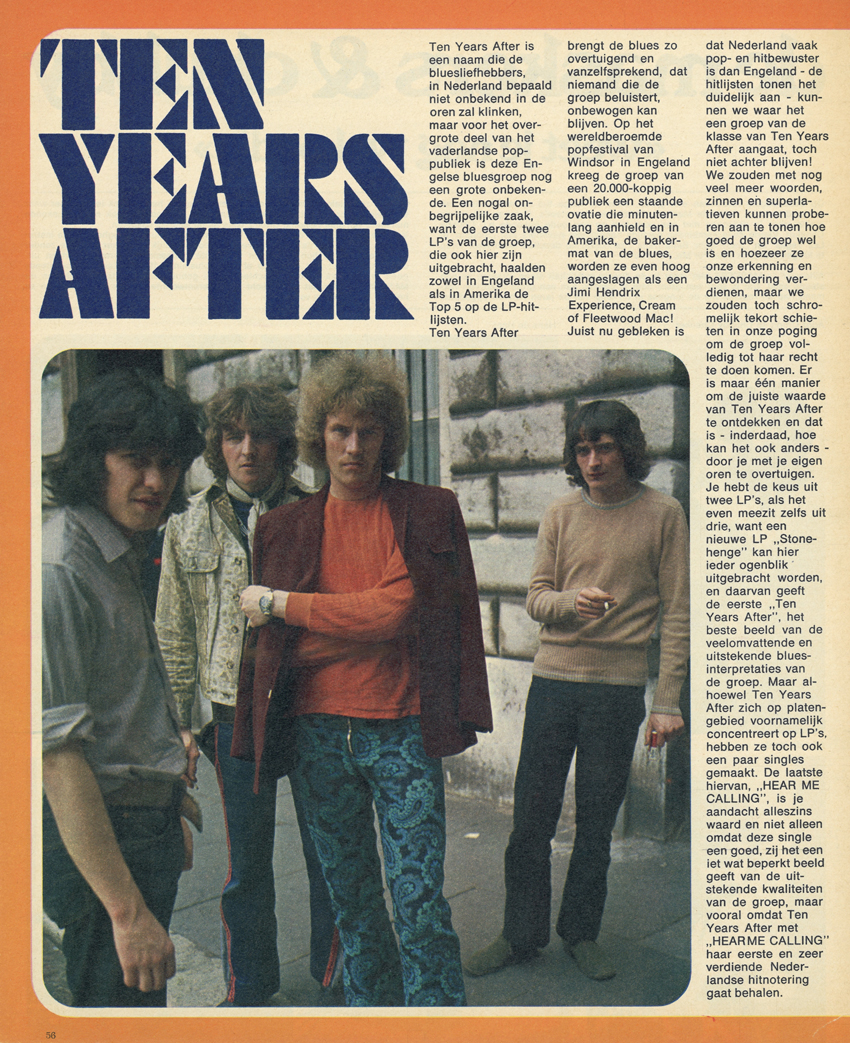
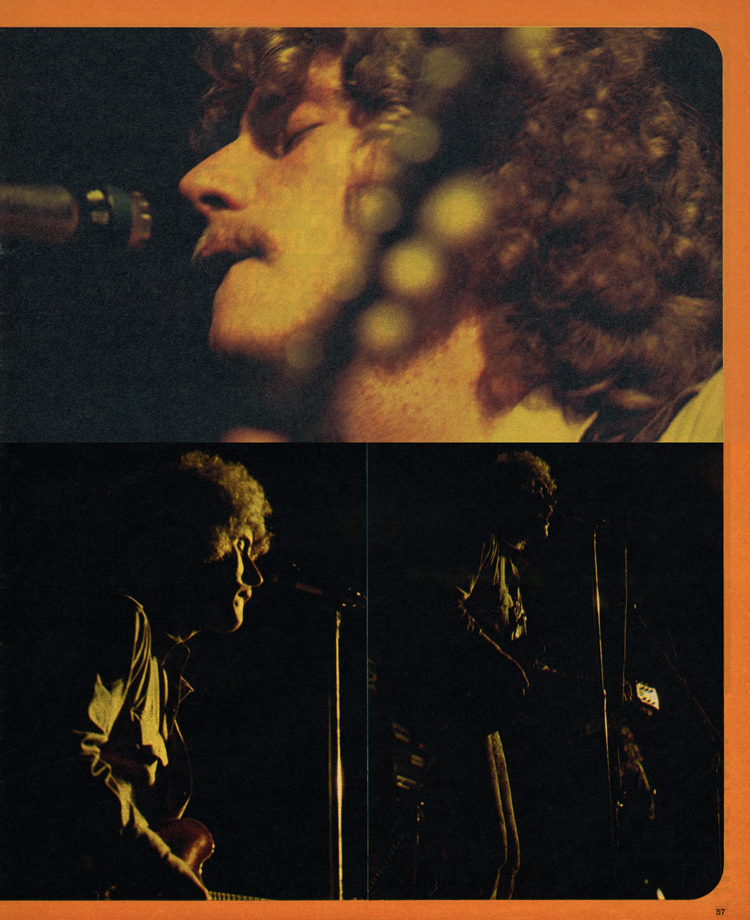
|